Effective pipeline stabilization acts as the backbone of industrial, commercial, and mechanical routing systems. Without a highly secure framework, heavy fluid transit introduces immense physical stress to your surrounding architecture. Incorrectly specifying overhead versus base-mounted solutions often leads to dangerous and detrimental outcomes. You risk severe structural fatigue, immediate code violations, and premature system failure. Engineers must navigate complex variables to ensure pipeline integrity remains intact over decades of heavy use. We will break down exactly how tension-based and compression-based systems differ in practical applications. You will learn how to accurately evaluate these specific configurations for distinct project environments. We also provide clear criteria for selecting the precise mounting method required for your facility. By thoroughly understanding these foundational mechanical principles, you ensure a much safer, more reliable piping infrastructure.
Key Takeaways
Core Distinction: Pipe hangers suspend pipes from above (handling tension loads), while pipe supports bear weight from below (handling compression loads).
Movement Management: The choice dictates how a system handles thermal expansion, vibration, and dynamic loads.
Infrastructure Synergy: Both systems frequently rely on shared framework infrastructure, such as strut channels, to distribute weight safely.
Selection Standard: Decision-making must align with load calculations, spatial constraints, and compliance standards (e.g., MSS SP-58).
The Structural Divide: Tension vs. Compression
Understanding pipeline stabilization begins by examining fundamental load paths. Engineers categorize these mechanical assemblies based on how they transfer structural weight. You must recognize the difference between tension loads and compression loads to design a resilient network.
Defining Pipe Hangers (Tension): Pipe Hangers operate entirely on the principle of tension. They transfer the immense downward pull of the pipeline upward into your ceiling structures or overhead structural beams. Gravity constantly pulls the pipe downward, but the hanger rod securely resists this force. You will typically see these tension-based assemblies in commercial HVAC routing, indoor plumbing systems, and tight overhead spaces. Because they hang from above, they leave the floor entirely unobstructed.
Defining Pipe Supports (Compression): Conversely, pipe supports operate through compression. They bear the entire physical weight of the piping run and transfer that load directly downward. The energy moves into solid concrete floors, structural roofs, or custom foundational platforms. Gravity pushes the pipe down, and the sturdy base pushes back. You will deploy compression configurations primarily for heavy industrial piping, large-diameter fluid transit, and ground-level utility runs.
Engineering Reality: In practical design scenarios, engineers rarely treat these two categories as mutually exclusive. Industry professionals frequently discuss pipe hangers and supports together because complex fluid systems demand a hybridized approach. A single mechanical routing system might start on a ground-level concrete pad, run vertically up a wall, and then suspend from the ceiling. Therefore, most facilities require a strategic blend of both tension and compression systems to achieve optimal structural safety.
Evaluating Pipe Hangers for Overhead Routing
Deploying tension-based overhead configurations offers distinct mechanical advantages for modern facilities. Planners rely on hangers to optimize spatial efficiency while maintaining strict structural integrity.
Primary Advantages: Suspending a pipeline from above instantly maximizes your available floor space. Facility managers highly value this approach because it prevents tripping hazards and keeps heavy equipment pathways entirely clear. Furthermore, overhead mounting utilizes existing ceiling infrastructure. You can easily integrate overhead rods with modular Strut Channels. These modular frameworks allow you to run multiple parallel pipes simultaneously, creating a highly organized and visually clean utility corridor.
Common Configurations: You will encounter several specialized hanger types in the field, each designed for specific routing needs.
Clevis Hangers: These feature a distinctive U-shaped lower strap connecting to an upper yoke. They provide exceptional vertical adjustability after you complete the installation.
Band Hangers: A simple, teardrop-shaped loop supports the pipe. Contractors use these extensively for stationary, lightweight plumbing applications.
Roller Hangers: These assemblies suspend the pipe but feature a bottom roller wheel. They accommodate longitudinal movement while still relying on overhead tension.
Implementation Risks: Despite their spatial benefits, hangers introduce specific vulnerabilities. Tension setups remain highly susceptible to lateral sway. If a seismic event occurs, or if fluid surges create a violent water hammer effect, suspended pipes can swing dangerously. You must install secondary seismic bracing to mitigate this movement. Additionally, hanging systems strictly rely on the existing structural integrity of the roof or ceiling. If you miscalculate the ceiling's load-bearing capacity, you risk catastrophic structural failure.
Evaluating Pipe Supports for Load and Movement
When you handle massive industrial pipelines or extreme fluid velocities, compression-based systems become absolutely mandatory. Base-mounted configurations deliver raw structural power.
Primary Advantages: Base supports offer superior capabilities for high-load capacity requirements. When you route large-diameter pipes filled with dense industrial fluids, overhead structures simply cannot handle the tonnage. Pushing that weight directly into a concrete foundation ensures total structural safety. Base configurations also provide significantly better stability against lateral movement. They anchor firmly to the ground, which naturally dampens intense vibrations generated by heavy pumps and compressors.
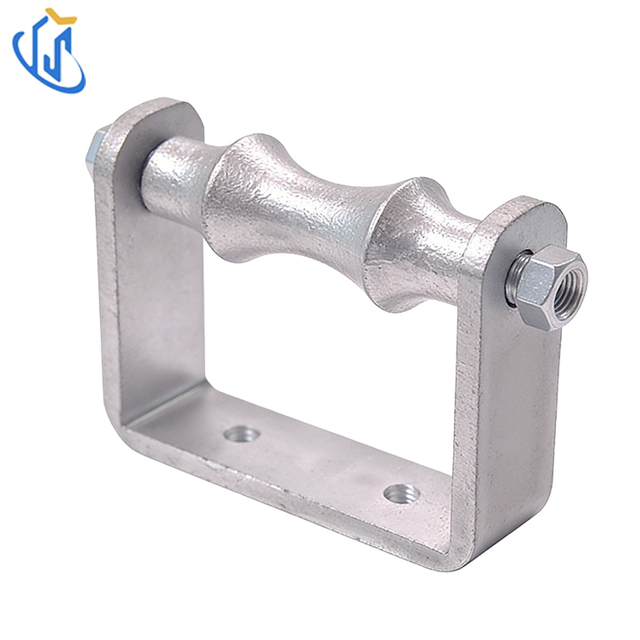
Managing Thermal Expansion: Temperature fluctuations represent a massive threat to pipeline integrity. As fluids heat up, the pipe physically elongates. If you bolt the pipe rigidly to a base, this thermal expansion causes immense friction. To prevent this, you should introduce a Pipe Roller Chair. This critical support mechanism bears the heavy downward load while allowing the pipe to glide smoothly along its horizontal axis. A high-quality roller chair successfully absorbs the longitudinal movement caused by thermal shifts. It protects the sensitive pipe jacket and prevents the support base from tearing apart under sheer stress.
Implementation Risks: Compression assemblies require a dedicated physical footprint. They consume valuable floor space, which can complicate facility navigation. You must also monitor potential debris accumulation around the base. Leaves, dirt, and industrial byproducts easily gather around ground-level stanchions. If you do not properly specify protective coatings or drainage, this debris traps moisture against the metal. This moisture entrapment rapidly accelerates corrosion under the pipe insulation.
Core Evaluation Dimensions for Your Next Project
Selecting the correct mounting hardware requires meticulous engineering analysis. You cannot rely on guesswork. Every decision must stem from rigorous mathematical evaluation and environmental assessment.
Load Type and Capacity: You must calculate both static and dynamic forces. Static weight includes the constant mass of the physical pipe, the transported fluid, and the exterior insulation. However, you must also calculate dynamic loads. Water hammer shocks, high wind shear on exterior runs, and potential seismic activity all exert sudden, violent forces on the assembly. Your chosen hardware must withstand both constant pressure and sudden impact.
Spatial Constraints and Framework: Always assess your available ceiling clearance versus your actual floor availability. If you lack solid concrete flooring, you must look upward. If your roof trusses cannot bear heavy loads, you must build downward. In complex environments, evaluate the necessity of building custom mechanical racks. By utilizing strut channels, you can construct robust, multi-tiered frames that perfectly accommodate both hanging systems and base-mounted saddles simultaneously.
Material Compatibility: Preventing galvanic corrosion stands as a critical priority. When two dissimilar metals touch in a humid environment, one metal will rapidly corrode the other. You must ensure the hardware material or its protective coating perfectly matches your pipe material. If you support a copper pipe, use copper-plated or neoprene-lined hardware. For bare carbon steel pipes, utilize hot-dipped galvanized steel supports to guarantee longevity.
Regulatory Compliance: Never bypass industry regulations. Strict adherence to codes like ASME B31 ensures your pressure piping remains safe. Furthermore, standard MSS SP-58 explicitly defines allowable stress levels, material specifications, and exact spacing requirements for hanging hardware. Non-compliance results in failed inspections and severe safety liabilities.
Table 1: Evaluation Matrix for Mounting Solutions
Evaluation Dimension
Tension Systems (Overhead)
Compression Systems (Base)
Load Capacity
Limited by ceiling truss strength.
Extremely high; transfers to foundation.
Space Utilization
Excellent; preserves ground pathways.
Poor; consumes physical floor footprint.
Vibration Control
Requires extra seismic sway bracing.
Naturally dampens heavy pump vibrations.
Thermal Movement
Addressed via swing joints or rollers.
Addressed efficiently via roller chairs.
Implementation Realities
Translating theoretical engineering designs into physical reality requires careful logistical planning. The installation process fundamentally differs depending on your chosen load path.
Installation Efficiency: Consider the intense physical labor differences during installation. Deploying tension hardware usually requires contractors to drill into ceiling beams, set heavy-duty drop-in anchors, and thread steel rods while working on elevated lifts. Conversely, base-mounted systems require completely different labor skills. Contractors must often pour concrete pads, wait for proper curing times, and physically set heavy steel stanchions onto the ground. Each method demands distinct tooling, unique safety protocols, and different project timelines.
Maintenance & Accessibility: Your initial choice permanently impacts future facility maintenance. Overhead pipelines remain notoriously difficult to access. Technicians need scaffolding or scissor lifts merely to perform visual inspections or replace damaged insulation. Base-level configurations offer immediate, ground-level access. Inspectors can easily walk the line, apply non-destructive testing (NDT) to the welds, and monitor thermal expansion joints without specialized climbing equipment.
Shortlisting Logic: To streamline your decision process, follow these practical rules:
Choose hanging configurations when ground space is practically non-existent, and overhead structural steel can easily manage the calculated static weight.
Choose base supports when you deal with massive fluid tonnage, ground-level transit routes, or when the ceiling architecture lacks load-bearing integrity.
Integrate specialized roller setups whenever you calculate extreme thermal expansion, ensuring the pipeline glides rather than grinds against its restraints.
Conclusion
The engineering choice between hanging a pipeline or supporting it from below relies entirely on structural load paths and thermal movement requirements. You must base your selection on hard physical data, not on arbitrary visual preference. Correctly deploying these mechanical assets prevents catastrophic structural fatigue and ensures strict regulatory compliance.
Before purchasing hardware, advise your engineering and procurement teams to completely finalize their load calculations. They must map out spatial constraints, review environmental hazards, and verify exact material compatibility. Rushing this calculation phase invariably leads to dangerous installations.
Consult directly with a technical sales engineer to verify your load metrics. Take time to thoroughly browse specific catalogs of compliant mounting hardware to match your exact project specifications and safeguard your critical infrastructure.
FAQ
Q: Can pipe hangers and supports be used on the same pipeline?
A: Yes. Complex industrial routing systems frequently require mixing both types. Transitions between vertical fluid risers and long horizontal runs demand varied weight distribution. You will often use base mounts for the heaviest ground sections and switch to overhead tension configurations to bypass floor obstacles efficiently.
Q: When should I use a pipe roller chair instead of a standard base support?
A: You should use a roller chair whenever the pipeline is subject to significant thermal expansion or contraction. A rigid standard support creates immense friction as the pipe changes length. A roller chair allows the pipe to glide safely along its horizontal axis, preventing damage.
Q: How far apart should pipe hangers be spaced?
A: Spacing is strictly governed by the pipe's specific material, outer diameter, and fluid contents. You must define this spacing using local building codes and rigorous standards like MSS SP-58. Never guess or estimate hanger spans without directly referring to the applicable engineering code.
Utterly TY Intelligent Technology Co.,Ltd. is a high-tech private enterprise integrating product design, research and development, sales and installation.