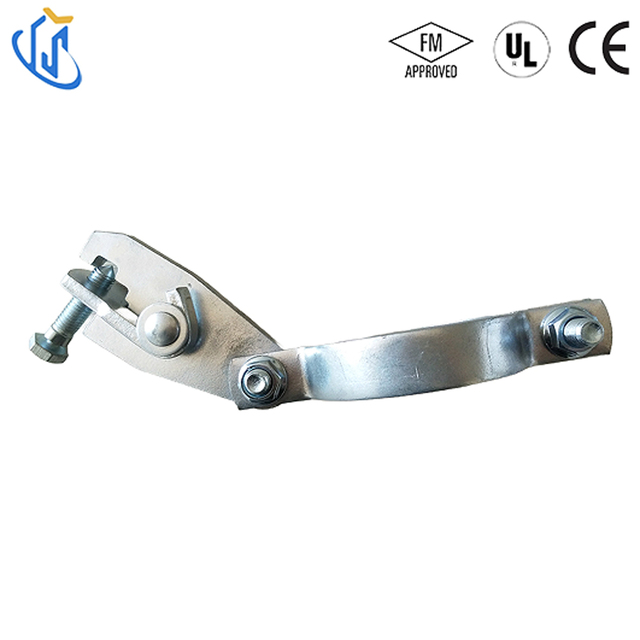
Selecting the correct 2 inch pipe clamp is not a generic procurement task. It remains a critical engineering decision. This choice dictates the structural integrity and code compliance of fire sprinkler and MEP (Mechanical, Electrical, and Plumbing) systems. In high-stakes applications, a mismatched clamp leads to failed inspections. It can cause severe galvanic corrosion. It might even trigger catastrophic system failure during seismic events. You must thoroughly evaluate technical criteria to ensure safety.
This guide breaks down these vital technical requirements. We examine dimensional realities and rigorous compliance mandates. You will learn how to verify load capacities accurately. We will also cover material compatibility to secure your installations. By mastering these specification details, you can prevent costly field rework. You will ensure long-term stability across commercial and industrial infrastructure projects.
Key Takeaways
Dimensional Accuracy: A "2-inch" pipe refers to Nominal Pipe Size (NPS). The clamp must accommodate the actual Outer Diameter (O.D.) of 2.375 inches for standard steel piping.
Code Compliance: Fire protection applications require strict adherence to NFPA 13, mandating UL Listed or FM Approved hardware capable of supporting specific water-filled weights plus safety margins.
Seismic Readiness: Standard gravity hangers are insufficient for earthquake zones; dedicated seismic sway bracing and lateral clamps must be integrated into the specification.
Material Compatibility: Clamp material and coating must match the pipe material to prevent galvanic corrosion and mechanical scoring, particularly with CPVC or copper systems.
1. Dimensional Realities: Nominal vs. Actual Sizing
NPS vs. O.D. Discrepancy
Engineers and contractors often confuse nominal measurements. A standard 2-inch pipe does not measure exactly two inches across. The term "2-inch" refers to the Nominal Pipe Size (NPS). For standard steel piping, the actual Outer Diameter (O.D.) measures 2.375 inches. You must specify a clamp designed for this exact outer dimension. If a clamp inner diameter measures only 2.0 inches, it will not close over the pipe. Forcing an undersized clamp causes severe mechanical stress. It bends the fastener hardware and damages the pipe surface.
Pipe Schedule Variations
Outer diameters remain constant across different pipe schedules. Wall thicknesses, however, change significantly. Schedule 10 and Schedule 40 pipes share the exact same 2.375-inch O.D. Yet, their internal wall thicknesses differ. This alters the overall weight of the water-filled pipe. Your selected hardware must support these varying weight loads safely. A heavier Schedule 40 system requires robust anchoring points. Schedule 10 systems carry slightly less weight but remain vulnerable to crushing forces if hardware is over-tightened.
Table: Dimensional and Weight Variances for 2-Inch Steel Pipe
Pipe Schedule
Nominal Size (NPS)
Actual O.D. (Inches)
Empty Weight (lb/ft)
Water-Filled Weight (lb/ft)
Schedule 10
2"
2.375
2.66
4.32
Schedule 40
2"
2.375
3.65
5.13
Schedule 80
2"
2.375
5.02
6.28
Insulation Allowances
MEP systems frequently require thermal insulation. Chilled water lines generate condensation. They demand continuous vapor barriers. You cannot clamp directly onto bare chilled water pipes. Doing so breaks the vapor barrier and causes harmful condensation leaks. Plumbers must use oversized clamps. They integrate rigid structural inserts, like calcium silicate blocks, between the pipe and the hardware. Standard wet fire sprinkler lines typically operate without insulation. For these fire lines, hardware mounts directly onto the bare steel surface.
2. Core Clamp Categories for 2" MEP and Fire Systems
Standard Clevis Hangers
Clevis hangers provide standard gravity support. They handle vertical dead loads on typical sprinkler branch lines. The design features a lower U-shaped yoke and a cross bolt. This configuration allows significant adjustability. Installers can easily pitch the pipe for drainage. Clevis hardware primarily supports static weight. It allows slight longitudinal movement during thermal expansion. You should specify clevis hangers for horizontal runs where lateral movement poses no structural risk.
Fire Seismic Pipe Clamp & Seismic Sway Pipe Clamp
Modern building codes demand earthquake-resistant infrastructure. Standard gravity hangers fail during violent ground tremors. Engineers must transition from static load support to dynamic load resistance. A dedicated Fire Seismic Pipe Clamp provides specialized structural bracing. These components secure the pipe against multi-directional forces. To handle severe lateral and longitudinal forces, you must integrate a Seismic Sway Pipe Clamp. These sway braces lock the system to the structural ceiling. They prevent chaotic swaying motions. They keep water mains from fracturing during a seismic event.
U-Type Lateral Clamp
Some applications require absolutely rigid mounting. Suspended clevis hangers allow too much movement for certain setups. In these scenarios, a U-Type Lateral Clamp becomes essential. Installers use these U-bolts and U-straps for flush-mounting pipes directly to structural members. They bolt directly into Unistrut channels or steel beams. This hardware entirely restricts sway. Engineers specify U-type lateral hardware near sensitive equipment connections. They also use them on vertical standpipes where shifting causes joint failure.
Top/Bottom Beam Clamps
You must evaluate your structural attachment points carefully. Beam clamps anchor the hanging system to the building framework. You attach them either to the top flange or the bottom flange of a steel beam. Top beam clamps generally support higher loads. The load rests securely on the top edge of the beam. Bottom beam clamps pull down against the flange lip. You must verify the manufacturer load data. Always check the steel web thickness before selecting flange attachment hardware.
3. Evaluating Load Capacity and Structural Compliance
NFPA 13 Load Baselines
Fire systems operate under stringent regulatory standards. The National Fire Protection Association (NFPA) outlines strict load baselines in NFPA 13. A hanger must support five times the weight of a water-filled pipe. In addition to this multiplier, it must handle an extra 250 pounds (114 kg). This ensures the hardware can support a technician pulling on the line or an unexpected structural shift. You must calculate these baselines accurately to guarantee compliance. Failing to meet this safety margin triggers immediate inspection failures.
UL Listing & FM Approval
Generic hardware is insufficient for life-safety systems. You cannot use standard commercial-grade fasteners for fire protection. Every hardware component must undergo rigorous independent testing. Look for stamps from Underwriters Laboratories (UL) or Factory Mutual (FM). A UL Listed product has passed destructive load testing. An FM Approved component meets strict property-loss prevention standards. You must verify these testing laboratory stamps on your submittal data. Installers must never substitute unlisted hardware in the field.
Static vs. Dynamic Ratings
Load ratings fall into two distinct categories. Gravity-load limits define static ratings. These represent the simple downward pull of a stationary water-filled pipe. Seismic force ratings define dynamic loads. Earthquakes introduce violent lateral, longitudinal, and upward thrust forces. Standard hangers only carry static ratings. They will snap during a seismic event. You must never specify standard gravity hardware in applications requiring rated seismic assemblies. Always verify dynamic ratings for installations in earthquake-prone zones.
4. Implementation Risks and Field Failures
Galvanic Corrosion
Placing plain carbon steel hardware directly against copper piping creates a battery effect. This process is called galvanic corrosion. The dissimilar metals react in the presence of moisture. The anodic metal degrades rapidly. Within months, this corrosion eats through the pipe wall and causes disastrous leaks. You must prevent direct metal-to-metal contact between dissimilar materials. Specify zinc-plated, electro-galvanized, or epoxy-coated hardware. Alternatively, use copper-plated hangers for copper lines. Proper material matching prevents rapid system degradation.
CPVC Scoring and Stress
Many modern fire systems utilize CPVC plastic piping instead of steel. CPVC offers excellent fire resistance but remains susceptible to mechanical damage. Standard metal hardware features sharp machined edges. These sharp edges dig into the CPVC surface as the pipe expands and contracts. This scores the pipe and creates microscopic fractures. Over time, these micro-fractures lead to explosive pipe failure under pressure. You must specify flared-edge designs or rubber-lined hardware. These smooth surfaces protect the CPVC lines from abrasive wear.
Torque Specifications
Improper installation causes severe structural risks. Over-tightening is a common field mistake. Technicians often use impact drivers to secure hardware bolts. Excessive torque strips the bolt threads. It pushes the metal past its yield strength. The hardware body might look strong, but compromised fasteners ruin the structural integrity. Manufacturer-specified torque limits govern the entire assembly. You must enforce strict adherence to these limits. Use calibrated torque wrenches during installation to ensure long-lasting structural security.
5. Procurement and Specification Checklist
Define the Application
You must isolate the specific system environment before ordering hardware. Wet fire systems require different support than dry fire systems. HVAC chilled water systems demand insulation clearance. Plumbing systems might carry highly corrosive waste. Evaluate the baseline physical environment closely. Determine if the installation is indoor or outdoor. Check for high vibration from nearby heavy machinery. Coastal environments demand stainless steel to resist salt spray.
Submittal Verification
Specification requires mandatory documentation. Do not accept hardware based on visual similarity alone. You must collect technical data sheets for every component.
Confirm material grades, such as ASTM A36 carbon steel.
Verify exact load ratings for both static and dynamic forces.
Check specific agency approvals, including UL, FM, or local building codes.
Review chemical compatibility charts if installing on plastic piping.
Rigorous submittal verification stops non-compliant materials from reaching the job site.
Labor vs. Material Cost Framing
Project managers often focus solely on the unit price of hardware. This narrow view ignores field realities. Multi-piece traditional hardware costs less upfront. However, assembling multiple bolts, nuts, and straps takes significantly longer. Pre-assembled, single-piece hinged designs carry a higher material price tag. Yet, they snap into place in seconds. During a massive facility rollout, these efficient designs save hundreds of expensive labor hours. You must compare upfront material pricing against hidden labor costs to optimize the project budget.
Conclusion
Specifying a 2 inch pipe clamp requires deep technical oversight. You must move past general dimensions and scrutinize actual O.D. measurements. Understanding load capacities ensures you meet strict NFPA requirements. Assessing material interactions prevents catastrophic galvanic corrosion and mechanical failure. For MEP and fire protection professionals, rigorous adherence to approved submittal data is non-negotiable. Following these standards mitigates liability and guarantees system longevity. By applying these engineering principles, you will pass final inspections effortlessly and eliminate costly field rework.
FAQ
Q: Can I use a standard MEP 2 inch pipe clamp for a fire sprinkler line?
A: You can only use it if the specific clamp model carries a UL Listing or FM Approval. It must also meet the specific NFPA 13 weight and structural support requirements for water-filled lines. Standard commercial-grade plumbing hangers rarely meet these strict life-safety compliance standards.
Q: What is the actual inside capacity needed for a standard 2-inch steel pipe clamp?
A: The clamp must cleanly accommodate an Outer Diameter (O.D.) of 2.375 inches. It should enclose the pipe completely without pinching the surface. You should not require excessive bolt torque to force the hardware closed around a standard Schedule 40 or Schedule 10 steel line.
Q: When is a U-Type Lateral Clamp preferred over a Clevis hanger?
A: U-Type clamps are utilized when rigid mounting to a structural surface is required. They eliminate pipe movement or lateral sway. Clevis hangers allow for suspended vertical support and slight longitudinal movement. Use U-Types where zero shifting is permitted, such as tight equipment connections.
Q: Where should a Seismic Sway Pipe Clamp be positioned on a 2-inch line?
A: Positioning must follow engineered seismic plans and NFPA 13 spacing guidelines. These standards dictate maximum distances between lateral and longitudinal braces. The exact spacing depends on the specific seismic design category of the building and the overall length of the branch line.
Utterly TY Intelligent Technology Co.,Ltd. is a high-tech private enterprise integrating product design, research and development, sales and installation.