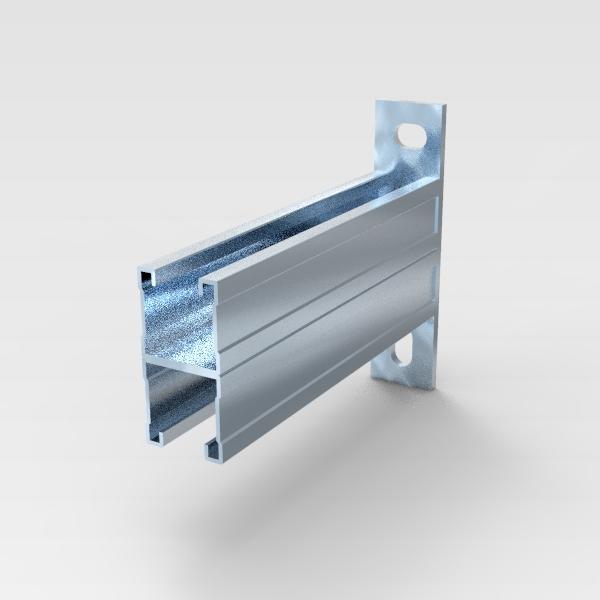
Facility engineers and warehouse operations managers constantly face difficult choices. They must support heavy or oversized loads reliably every single day. Balancing rigorous structural integrity against operational constraints presents a unique challenge. You need to minimize installation downtime. You also must keep initial labor expenses under control. Relying solely on basic product sheets often leads to under-specified systems and hidden safety risks.
This guide moves beyond standard promotional materials. We examine the exact engineering criteria, installation efficiencies, and safety compliance factors necessary for industrial applications. You will learn how to specify a Cantilever Bracket engineered for stringent real-world demands. We unpack structural mechanics, connection designs, and material durability. By the end, you will understand exactly how to align physical load capacities with your specific facility operations.
Key Takeaways
Specifying the correct cantilever bracket requires evaluating dynamic and static load capacities, not just relying on nominal manufacturer ratings.
Modern bracket designs incorporate multi-study structural optimizations that distribute stress and prevent premature material fatigue.
Installation speed is dictated by connection design; precision-engineered brackets reduce alignment errors and minimize the need for on-site modifications.
Validating a supplier requires scrutinizing their testing transparency, raw material certifications, and compliance with structural safety standards.
The Engineering Realities of High-Capacity Cantilever Systems
Engineers must clearly define the mechanical baseline of a Cantilever Bracket. These components transfer substantial bending moments to vertical columns or walls. They operate as levers. Weight placed on the arm multiplies the force exerted at the base joint. A robust design safely dissipates this leveraged force down the structural upright.
Standard brackets often fail under heavy industrial loads. Under-specified components introduce severe operational hazards. You might observe excessive deflection along the arm. Localized buckling at the root connection happens frequently. Weld failures pose the most catastrophic risk. When manufacturers use inferior steel, the base joint cannot handle the amplified stress. This leads to sudden structural collapse.
We must differentiate dynamic loads from static loads. Static loads only account for resting weight. Dynamic loads include impact forces. Forklifts bump into arms during material retrieval. Environmental vibrations travel through facility floors. You must account for these unpredictable impacts during the specification phase.
Here are common mistakes observed in the field:
Ignoring the lever principle when placing heavy items near the arm tip.
Assuming static weight limits cover minor forklift collisions.
Failing to verify the structural integrity of the anchoring wall or column.
Using standard commercial brackets for continuous industrial cycles.
You ensure structural predictability through rigorous risk mitigation. Specifiers must anticipate harsh operational realities. Relying on theoretical limits is dangerous. Structural predictability requires accounting for human error, machinery impact, and shifting inventory profiles.
Evaluating Load Capacity and Structural Optimization
True load capacity depends on several specific variables. You must evaluate arm length, base material thickness, and steel grade. Yield strength dictates how much stress the metal handles before permanent deformation. Longer arms increase the bending moment exponentially. Thicker base materials resist the tearing forces at the connection point.
Modern manufacturing utilizes advanced analytical tools. Finite element analysis (FEA) maps stress concentrations across the component. Engineers use multi-study structural optimization during the design phase. They identify weak points near the base joint. Manufacturers then add targeted gussets or refine the root geometry. This eliminates localized stress points and prevents premature material fatigue.
Maximum capacity ratings carry a massive hidden assumption. They always assume uniformly distributed loads. Real-world inventory rarely sits perfectly balanced. Specifiers must calculate derating factors for asymmetrical weight distribution. A point load at the tip drastically reduces the safe operating capacity. You must understand this distinction to maintain facility safety.
Documented safety factors remain non-negotiable. Industry standards typically require a 2:1 safety factor or greater. Theoretical limits mean very little in a busy warehouse. Specifiers should demand tangible testing data. You need proof of ultimate failure limits, not just marketing claims.
Load Capacity Assessment Breakdown
Load Type
Force Distribution
Impact on Bracket Joint
Required Derating Action
Uniformly Distributed Load (UDL)
Evenly spread across the entire arm length.
Standard bending moment. Meets nominal rating.
None. Follows manufacturer specs.
Point Load (Center)
Weight concentrated at the middle of the arm.
Increases stress. Multiplies root force.
Derate capacity by approximately 50%.
Point Load (Tip)
Weight concentrated at the furthest edge.
Maximum bending moment. Highest failure risk.
Derate capacity by up to 75%. Consult engineer.
Design Features That Accelerate Installation Speed
Faster installation significantly offsets premium unit costs. A heavy-duty Cantilever Bracket might carry a higher upfront material price. However, rapid assembly reduces expensive contractor hours. Facility managers must frame their business case around total deployment time. Operational downtime costs more than premium steel.
Connection designs dictate assembly speed. Modular, bolt-on connections offer incredible efficiency. On-site welding requires intense labor. You need skilled welders, specialized equipment, and strict fire watches. Welded joints also demand cooling times and post-weld inspections. Bolted connections bypass these delays entirely. Teams install bolted brackets using standard impact wrenches.
Precision manufacturing guarantees tight tolerances. Standardized hole patterns ensure immediate fitment. Self-aligning features reduce the margin for human error. Installers do not waste time forcing misaligned parts together. These features streamline the assembly checkpoint process. Quality control becomes faster and much more reliable.
Consider the field adjustability of your chosen system. Warehouses frequently change their inventory profiles. Facility teams must reconfigure storage systems quickly. A bolted Cantilever Bracket adjusts effortlessly. Workers simply loosen the hardware, reposition the arm, and retorque the bolts. Welded systems force you to cut steel and grind joints. Adjustability preserves structural integrity while maintaining operational agility.
Follow these standard assembly checkpoints for rapid deployment:
Verify the structural adequacy of the vertical column.
Align the bracket base plate over the pre-drilled column holes.
Insert primary load-bearing bolts hand-tight to ensure thread engagement.
Engage the self-aligning locking pin if present.
Torque all bolts to the manufacturer's specified tension limits.
Mitigating Risk: Material Durability and Environmental Compliance
Industrial environments destroy unprotected steel. Warehouses and manufacturing plants feature harsh conditions. High humidity accelerates oxidation. Chemical exposures degrade surface materials. Extreme temperature fluctuations cause condensation. Environmental degradation compromises structural integrity over time. You must protect your heavy-duty supports.
Surface treatments determine long-term durability. Specifiers must compare options based on specific environmental compliance needs. Powder-coating provides a durable, cost-effective finish for climate-controlled indoor spaces. Hot-dip galvanizing excels in outdoor or highly humid environments. The zinc coating sacrifices itself to protect the underlying steel. Stainless steel offers the ultimate defense for sterile food processing or corrosive chemical plants.
Surface Treatment Comparisons
Treatment Option
Primary Environment
Key Advantage
Potential Limitation
Standard Powder-Coat
Indoor, climate-controlled.
Resists minor scratches. Visual appeal.
Chips expose raw steel to rust.
Hot-Dip Galvanized
Outdoor, heavy moisture.
Complete zinc barrier. Prevents deep rust.
Rougher texture. Utilitarian appearance.
304/316 Stainless Steel
Chemical, medical, food prep.
Inherent corrosion resistance.
Highest initial material cost.
Ongoing structural audits remain a strict reality. Installing a premium bracket does not eliminate maintenance. You must conduct regular inspections. Maintenance teams should look for hairline fractures near the root weld. They must verify bolt torque settings annually. Dynamic impacts loosen hardware over time. A proactive maintenance schedule catches minor issues before they trigger catastrophic failures.
Best practices for environmental risk mitigation include:
Matching the surface treatment strictly to the facility's ambient humidity.
Scheduling bi-annual torque checks on all bolted connections.
Training forklift operators to report all accidental arm impacts immediately.
Replacing any bracket exhibiting permanent deflection immediately.
Shortlisting Criteria: Making the Final Specification Decision
Specifying the right equipment requires aligning physical features to specific facility outcomes. You must match the bracket type to your primary goal. Do you need to maximize vertical storage space? Choose a low-profile base design. Does your project prioritize rapid deployment? Specify modular, self-aligning bolted systems. Clarify these operational outcomes before contacting suppliers.
Supplier transparency separates premium manufacturers from unreliable vendors. You must scrutinize their documentation. Use a strict transparency checklist. Ask if they provide certified engineering drawings. Demand detailed load tables covering both uniform and point loads. Do they supply real-world testing data? Third-party validation proves their engineering claims.
Supply chain reliability matters for large projects. Ask about their standard lead times. Inquire about manufacturing redundancies for bulk installations. A great Cantilever Bracket design fails your project if it arrives three months late. Reliable partners provide clear shipping schedules and maintain buffer stock.
Gather exact operational data before requesting a technical quote. Measure your heaviest anticipated load. Document the exact dimensions of your stored materials. Note any environmental hazards present in the facility. Providing this data upfront ensures the engineering team specifies a safe, optimized solution on their first attempt.
Conclusion
Optimizing structural support demands rigorous attention to detail. You must align engineering tolerances with your daily operational realities. Relying on basic uniform load ratings invites danger. Facility leaders must evaluate dynamic forces, demand testing transparency, and prioritize rapid installation features.
Remember this crucial final caveat: even the highest-quality brackets fail if the anchoring substrate is insufficient. A premium support arm cannot perform safely attached to a compromised wall or a weak column. Always validate your entire structural ecosystem.
Take actionable steps today to secure your facility. Download detailed technical spec sheets for your proposed systems. Access professional load-calculation tools to model your unique inventory profiles. Contact a qualified engineering team for a project-specific evaluation to guarantee total safety and compliance.
FAQ
Q: How do I calculate the correct spacing between cantilever brackets?
A: Spacing is dictated primarily by the deflection limits of the load being stored, not just the capacity of the brackets themselves. If your stored material sags between the arms, you need closer spacing. Always consult the material rigidity guidelines of your inventory to determine the maximum unsupported span.
Q: What is the difference between structural steel and roll-formed cantilever brackets?
A: Structural (hot-rolled) steel provides much higher impact resistance and massive load capacities. It handles heavy-duty industrial abuse. Roll-formed steel is lighter and more cost-effective. It serves well for lighter, uniform loads but bends much easier under direct forklift impacts.
Q: Are load capacities affected by where the weight is placed on the bracket?
A: Yes. Weight placement heavily affects capacity due to the lever principle. Weight placed at the extreme tip drastically increases the bending moment. This stresses the base joint far more than weight placed near the root. Always derate the capacity if you cannot guarantee uniformly distributed loads.
Q: Can cantilever brackets be customized for non-standard applications?
A: Yes, they can be customized. However, custom engineering requires specific structural validation. This process often extends lead times and alters standard safety certifications. You must ensure the manufacturer runs new finite element analyses on any custom geometry to guarantee safety.
Utterly TY Intelligent Technology Co.,Ltd. is a high-tech private enterprise integrating product design, research and development, sales and installation.