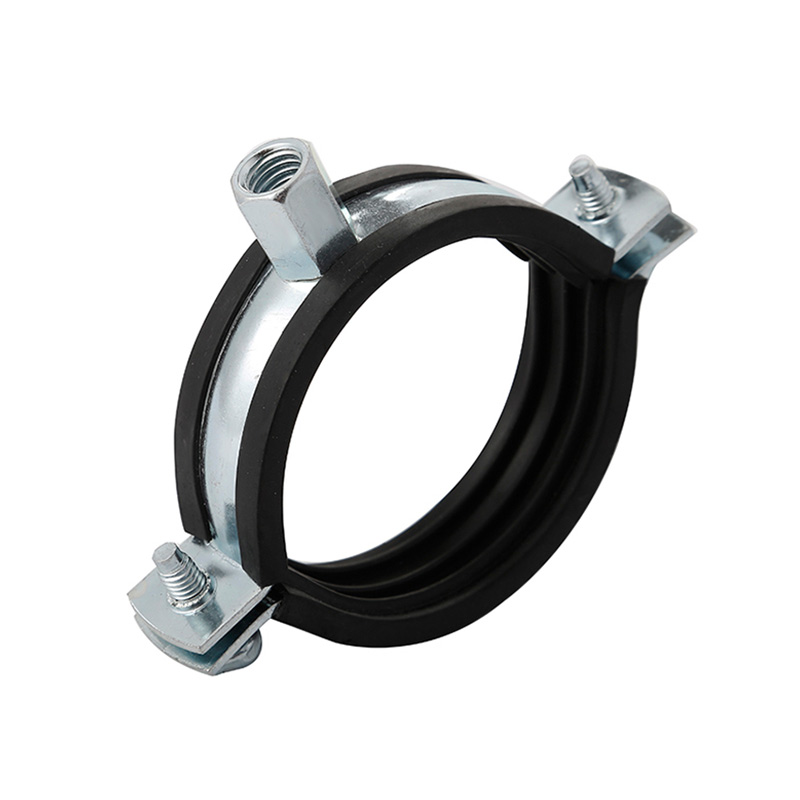
Industrial piping systems constantly face severe dynamic loads. High-volume plumbing networks rarely stay perfectly still during operation. When unmanaged, this continuous vibration quickly causes structural fatigue and acoustic non-compliance. Standard rigid clamps transfer kinetic energy directly into building structures. They accelerate mechanical wear and tear across the entire network. They also fail completely at mitigating disruptive noise pollution.
You need a strategic decoupling agent to solve these widespread issues. Deploying a specialized Rubber Lined Pipe Clamp—such as the UTT61—creates a robust acoustic and mechanical barrier. This guide explains the precise engineering rationale behind these essential components. You will learn the exact evaluation criteria and implementation realities for specifying the UTT61 in your next vibration reduction project.
Key Takeaways
Acoustic & Mechanical Decoupling: Elastomer-lined clamps physically isolate pipes from mounting structures, significantly reducing decibel output and structural fatigue.
Prevention of Secondary Failures: Beyond vibration, the rubber profile prevents metal-to-metal contact, eliminating galvanic corrosion and localized pipe wall abrasion.
Specification Matters: Success depends on matching the elastomer’s Shore A hardness and thermal limits to the project's specific dynamic loads and environmental conditions.
Installation Precision: Improper torque application can compress the rubber lining past its effective dampening range, neutralizing its vibration-reduction benefits.
The Business Cost of Unmitigated Piping Vibration
Operators must define the specific threat landscape first. Industrial facilities experience two primary mechanical stresses. Continuous vibration represents the most common issue. Heavy pumps, chillers, and HVAC units generate steady, rhythmic frequencies. These kinetic waves travel freely down uninsulated pipe runs. Transient shocks act differently. Sudden valve closures or rapid pump starts create intense water hammer effects. Both forces actively destroy rigid infrastructure. You must address them during the initial facility design phase.
Constant movement compromises joint integrity severely. Kinetic energy naturally seeks an exit path. It usually escapes through threaded connections or welded joints. Constant vibration accelerates micro-fractures in these weak areas. Unseen cracks eventually grow into catastrophic system leaks. Facilities suffer sudden pressure drops. Unplanned maintenance cycles quickly deplete operational budgets. Production lines experience costly downtime when critical lines fail.
Noise pollution creates severe workplace hazards. Occupational safety regulators monitor industrial decibel levels closely. High-frequency pipe ringing permanently damages human hearing over time. Commercial buildings face similarly strict acoustic standards. Office tenants demand quiet plumbing operations. Acoustic non-compliance often triggers expensive structural retrofits. Rigid metal hardware amplifies operational noise significantly. An engineered isolation strategy keeps your facility compliant and comfortable.
How the UTT61 Rubber Lined Pipe Clamp Alters Vibration Dynamics
To stop vibration transmission, you must alter how energy travels. The mechanism of action relies entirely on physical energy absorption. Rigid metal acts as a perfect acoustic conductor. It passes vibration directly into the unistrut or structural wall. An elastomer lining interrupts this direct pathway completely. The rubber converts kinetic vibration energy into negligible thermal energy. It absorbs the shockwave long before it reaches the mounting hardware.
Material science dictates component performance. Elastomer composition determines long-term success in harsh environments. Manufacturers typically utilize EPDM or Neoprene for their linings. EPDM offers excellent memory retention under continuous physical load. It bounces back efficiently after repeated compression cycles. Neoprene resists oil and industrial chemicals much better. However, EPDM dominates standard HVAC applications due to its superior weathering traits.
Profile geometry heavily influences dampening efficiency. Standard flat rubber strips perform poorly under dynamic stress. Specialized grooved profiles deliver far superior mechanical results. They actively manage motion rather than just padding it.
Grooves allow the elastomer to deform laterally under pressure.
Air pockets within the profile trap high-frequency acoustic noise.
Ribbed edges provide a stronger mechanical grip on smooth metal pipes.
Dual-threat mitigation makes these specialized clamps highly valuable. Mechanical vibration causes obvious physical damage. Galvanic corrosion acts silently over many months. Joining dissimilar metals initiates rapid electrochemical decay. Copper pipes resting directly on galvanized steel brackets corrode very quickly. The rubber lining acts as a complete dielectric barrier. It eliminates metal-to-metal contact entirely. This simple physical separation stops galvanic corrosion permanently.
Key Evaluation Criteria for Vibration-Damping Clamps
Engineers face a constant mathematical trade-off. They must balance load capacity against dampening efficiency. A clamp must easily support the static weight of a fluid-filled pipe. However, excessive weight fully compresses the rubber insert. Solidly compressed rubber loses its dampening capability immediately. It effectively becomes a rigid metal spacer. You must verify the static load rating leaves enough elasticity to absorb dynamic shocks.
Environmental resistance determines total product lifespan. Extreme conditions degrade cheap elastomers rapidly. You must evaluate specific environmental factors before specification. Thermal operating ranges dictate basic suitability. Freezing temperatures cause severe rubber embrittlement. High heat accelerates material melting or hardening. Chemical exposure destroys basic rubber compounds quickly. UV exposure causes surface cracking on outdoor pipe runs.
Elastomer Material Type
Typical Temperature Range
Primary Material Advantage
Best Application Environment
Standard EPDM
-40°C to +120°C
Ozone & Weather Resistance
General HVAC & Commercial Plumbing
High-Temp Silicone
-60°C to +225°C
Extreme Heat Tolerance
Steam Lines & Industrial Processing
Neoprene (CR)
-35°C to +100°C
Oil & Grease Resistance
Automotive & Petrochemical Plants
Testing standards separate premium products from cheap alternatives. Never rely solely on basic marketing claims. Request actual manufacturer test reports during procurement. Look for specific acoustic reduction dB ratings. Verify structural pull-out strength metrics carefully. Fire-rating compliance remains critical for commercial building codes. European standard DIN 4109 clearly defines acceptable noise levels in building construction. Strict UL certifications validate all critical safety claims.
Implementation Realities: Rolling Out UTT61 Solutions
Installation errors frequently destroy acoustic performance. Torque application represents the most common field failure point. Over-tightening physically crushes the elastomer insert. It forces all trapped air out of the grooved profile. This creates a highly rigid, non-dampening connection. To prevent operator error, your teams must follow these exact installation steps:
Clean the pipe exterior surface thoroughly to ensure a secure friction grip.
Position the lower clamp half securely onto the mounting channel or strut.
Place the heavy pipe gently onto the bottom rubber profile.
Apply the upper clamp half and insert the threaded locking bolts.
Tighten bolts incrementally on alternating sides until the rubber gently grips the pipe without bulging.
Strategic placement requires careful load calculation. You must determine appropriate spacing intervals based on pipe diameter and fluid weight. Placing a Rubber Lined Pipe Clamp directly adjacent to primary vibration sources demands caution. Chillers and heavy pumps generate massive dynamic loads. The first few structural supports off a heavy pump take extreme punishment. Standard rubber linings might fail prematurely here without supplementary isolation blocks.
Understand system movement limitations clearly. Elastomer clamps manage high-frequency vibration beautifully. They do not manage massive thermal expansion effectively. High-temperature steam lines grow significantly in physical length. Rigidly clamping these expanding lines restricts natural movement. Restricted thermal expansion causes severe pipe buckling or sheared bolts. For large thermal movements, you need engineered expansion joints or specialized sliding supports.
Comparing UTT61 to Alternative Clamping Solutions (Shortlisting Logic)
Project requirements dictate specific hardware choices. A baseline comparison highlights essential performance differences across categories. Standard unlined rigid clamps offer basic structural support only. They provide zero active noise reduction. They actively encourage pipe wall abrasion during daily micro-movements. A premium component solves both issues instantly. It cushions the pipe and heavily dampens noise transfer.
Heavy industrial applications sometimes require stronger isolation hardware. Massive industrial mains generate low-frequency, high-amplitude vibrations. Spring hangers handle these extreme physical forces much better. Heavy coil springs absorb deep, heavy movements smoothly. However, spring isolators cost significantly more and require complex installation procedures. For standard secondary lines, branching HVAC networks, and commercial plumbing, a Rubber Lined Pipe Clamp remains highly effective. It delivers the absolute best balance of cost, simplicity, and acoustic performance.
Mounting Hardware Type
Vibration Dampening Capability
Galvanic Corrosion Protection
Typical Engineering Use Case
Unlined Rigid Clamp
None (Transfers full energy)
None (Requires tape or plastic inserts)
Basic structural anchoring for dormant lines
UTT61 Lined Clamp
High (Targeting high-frequency noise)
Excellent (Creates full dielectric barrier)
HVAC runs, plumbing loops, secondary lines
Heavy Spring Isolator
Maximum (Absorbs low-frequency shock)
Varies (Depends on specific housing metals)
Large industrial pumps & primary water mains
Verification represents the final procurement step. Always request detailed specification sheets before ordering bulk quantities. Evaluate acoustic sample data from independent testing laboratories. Align the documented performance metrics precisely with your specific risk tolerances. Proper documentation ensures building inspectors approve your mechanical installation quickly.
Conclusion
The UTT61 rubber-lined pipe clamp operates as a critical component for system longevity and strict acoustic compliance.
Proper pipeline isolation prevents catastrophic joint fatigue and disruptive noise transfer in complex plumbing networks.
Evidence-based procurement guarantees long-term success; always rely on tested load data rather than basic assumptions.
Strict installation protocols prevent elastomer compression and maintain all physical dampening properties.
Take immediate action on your next mechanical design. Consult technical data sheets and load capacity charts early in the facility planning phase. Work directly with engineering consultants to verify the exact suitability of elastomer-lined hardware for your specific operational application.
FAQ
Q: How much noise reduction can be expected from a rubber lined pipe clamp?
A: A high-quality elastomer lining typically delivers a direct noise reduction of 15 dB to 18 dB in standard plumbing and HVAC applications. Exact results depend heavily on the overall system design, pipe diameter, and building wall structure. Meeting strict DIN 4109 acoustic standards usually requires combining these mounts with proper wall insulation.
Q: Does the rubber lining degrade over time in high-temperature environments?
A: Yes. All commercial elastomers possess specific thermal limits. Standard EPDM typically withstands continuous temperatures up to 120°C. Exceeding this rated limit accelerates thermal degradation quickly. The rubber hardens, becomes brittle, and completely loses its vibration-dampening elasticity. Extreme high-temperature applications require specialized silicone-based linings.
Q: Can UTT61 clamps be used on vertically routed pipes (risers)?
A: Yes, but you must carefully account for friction-grip realities. Elastomer linings handle moderate sheer loads very efficiently. However, heavy fluid-filled vertical risers exert immense downward gravity forces. For tall vertical runs, engineers must implement dedicated heavy-duty riser clamps at floor penetrations to prevent the pipe from slipping.
Q: What happens if the clamp is over-tightened during installation?
A: Over-tightening physically crushes the rubber profile flat. It effectively eliminates the crucial air gaps engineered within the grooves. This "bottoming out" effect turns the component back into a rigid bracket. It instantly nullifies all acoustic isolation and vibration-dampening properties, transferring kinetic energy directly into the surrounding mounting structure.
Utterly TY Intelligent Technology Co.,Ltd. is a high-tech private enterprise integrating product design, research and development, sales and installation.