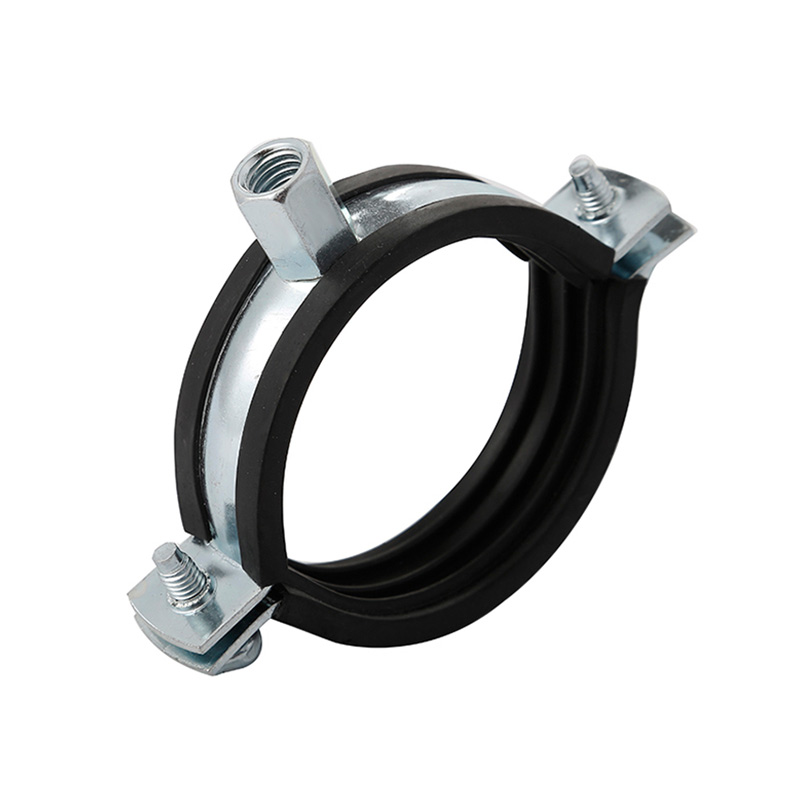
Industrial pipeline integrity relies heavily on the support infrastructure holding the piping material. Unmitigated vibration and unexpected thermal expansion account for a significant percentage of premature system failures today. Historically, engineers trusted rigid metallic supports to secure heavy fluid lines. However, these stiff systems struggle to absorb acoustic energy. They also cause severe friction against vulnerable pipe walls over time.
Transitioning to advanced acoustic and vibration-dampening solutions fundamentally solves these structural challenges. For modern facilities evaluating robust support systems, the Rubber Lined Pipe Clamp presents an engineered balance of structural rigidity, noise reduction, and long-term corrosion resistance. You will learn how different elastomeric materials perform under intense environmental stress. We will also examine critical load-bearing capacities. Finally, this guide outlines specific installation techniques you need to protect your critical piping infrastructure.
Key Takeaways
Vibration Mitigation: The specialized rubber lining significantly reduces acoustic noise and prevents metal-to-metal abrasion.
Thermal Flexibility: Accommodates minor thermal expansion and contraction without compromising the structural grip.
Evaluation Criteria: Choosing the right clamp requires matching load capacities, environmental exposures, and operating temperatures to the specific lining material (e.g., EPDM vs. standard rubber).
Implementation Focus: Proper torque application and spacing are critical to avoid over-compression of the rubber lining.
The Operational Cost of Rigid Piping Supports
Pumps and compressors generate continuous kinetic energy during standard daily operations. This mechanical energy travels directly down the entire piping network. Rigid metallic supports force this raw energy directly into the pipe joints and flanges. Over time, persistent operational vibration degrades these critical connection points. You will often see microscopic fractures develop near welds and threaded fittings. Eventually, these tiny structural cracks grow into dangerous fluid or gas leaks. Such mechanical failures trigger unexpected facility shutdowns instantly. They also introduce severe safety hazards for your floor personnel.
Standard metallic clamps often touch dissimilar pipeline materials directly. Direct metal-to-metal contact creates a serious engineering problem known as galvanic corrosion. When ambient moisture enters the environment, it acts as a conductive electrolyte. This setup accelerates the corrosion process rapidly. For example, placing a carbon steel clamp on a copper water line strips electrons from the less noble metal. The resulting corrosion compromises the pipe wall integrity substantially. Facility managers must constantly replace these weakened piping sections to prevent catastrophic system bursts.
Industrial noise levels face increasing regulatory scrutiny globally. Modern facilities must protect worker hearing and minimize community noise pollution effectively. Heavy fluid transport lines and massive HVAC systems generate severe structure-borne noise. Rigid clamps amplify this noise by transferring sound waves directly into the building structure. Regulatory bodies increasingly mandate strict acoustic management protocols. The lack of proper vibration dampening represents a direct regulatory compliance risk. Failing a mandatory acoustic audit can result in hefty operational fines.
Engineering Advantages of the UTT61 Rubber Lined Pipe Clamp
Structural Integrity Meets Flexibility
Engineers demand high tensile strength to secure heavy industrial lines securely. The UTT61 utilizes a highly robust outer band construction. Manufacturers forge this main band from premium galvanized steel or high-grade stainless steel. This solid metal housing dictates the primary mechanical strength of the assembly. It withstands substantial static piping forces without yielding or bending. High tensile strength keeps heavy transport lines securely locked in place during operation.
Furthermore, the unique UTT61 engineered profile distributes the clamping load evenly. It spreads the compressive force across the entire pipe circumference perfectly. This intelligent design prevents localized pressure points from forming on the pipeline exterior. Localized crushing remains a major structural threat for thin-walled copper or PVC process pipes. Distributing the clamping force properly ensures the pipe retains its perfect cylindrical shape under pressure.
The Role of the Elastomeric Lining
The internal rubber insert serves as the active defensive layer for the pipeline. This specific elastomeric lining provides measurable dampening metrics for complex industrial setups. High-quality rubber inserts routinely achieve noise reduction estimates of 15 to 18 dB(A). They absorb a exceptionally large percentage of incoming mechanical vibration. The rubber essentially decouples the rigid pipe from the solid building structure. This structural decoupling prevents structure-borne sound transmission almost entirely.
Additionally, industrial pipes constantly expand and contract during normal thermal cycling. The soft rubber lining accommodates this continuous microscopic movement safely. It completely prevents the abrasive metal-to-metal scraping commonly seen in traditional rigid clamps. This proactive abrasion prevention significantly extends the functional life of your expensive pipeline exterior. It eliminates the friction damage responsible for countless maintenance interventions.
Evaluating the UTT61 for Your Facility
Material and Environmental Constraints
Environmental variables dictate which internal lining material you must specify. You must evaluate exact temperature ranges and chemical exposures carefully before purchasing.
Standard rubber linings feature highly transparent thermal operational limits. They typically operate safely between -40°C and +110°C. EPDM inserts handle these standard temperature ranges perfectly for chilled water and standard HVAC lines. However, industrial steam lines and high-temperature process fluids exceed these physical boundaries easily. If your peak operating temperature climbs above 110°C, standard rubber will dry, crack, and fail. In these extreme thermal environments, you must upgrade to high-temperature silicone linings. Silicone maintains its vital elastomeric properties well beyond normal commercial heating limits.
Industrial environments regularly expose piping supports to harsh atmospheric conditions. A high-quality EPDM lining resists ultraviolet (UV) degradation outdoors excellently. It also resists atmospheric ozone cracking extremely well over long periods. This tough material withstands incidental contact safely against common industrial chemicals and mild acids. However, specific scenarios cause rapid elastomeric degradation. Direct, continuous exposure to heavy industrial solvents or petroleum-based oils breaks down EPDM quickly. In petrochemical facilities, you must verify the exact chemical compatibility.
Lining Material
Temperature Range
UV/Ozone Resistance
Oil/Solvent Resistance
Best Application Environment
Standard EPDM
-40°C to +110°C
Excellent
Poor
Commercial HVAC, Chilled Water Lines
High-Temp Silicone
-60°C to +225°C
Excellent
Moderate
Industrial Steam, High-Temp Process Fluids
Nitrile (Buna-N)
-35°C to +100°C
Moderate
Excellent
Petrochemical Plants, Oil Transport Lines
Sizing and Load Bearing Criteria
Choosing the correct hardware size ensures the Rubber Lined Pipe Clamp functions exactly as designed. You must match the specific load requirements accurately.
Here is a proven engineering framework for sizing and load assessment:
Measure the Outer Diameter (OD): Always size support clamps based on the pipe's actual external OD, not the internal nominal bore. You must include any external thermal insulation in your final OD calculation.
Calculate the Static Load: Determine the total combined weight of the pipe, the internal fluid, and any attached heavy valves. The clamp's metal housing must exceed this total static load comfortably.
Estimate the Dynamic Load: Account for sudden operational forces. Fluid surges, heavy pump startups, and thermal expansion generate severe dynamic loads. These invisible forces spike the mechanical stress on the support system instantly.
Adjust Support Spacing: Heavy dynamic loads require you to place supports much closer together. This spacing strategy reduces the overall physical strain on each individual support bracket.
Implementation Realities and Installation Risks
Avoiding Over-Torque Scenarios
Proper installation technique matters just as much as premium hardware quality. Overtightening remains the most common installation error executed in the field. Technicians often apply excessive rotational force to the side locking screws. This aggressive over-torque extrudes the soft rubber lining out the sides of the metal band. Crushed rubber loses its vital elasticity entirely. It can no longer absorb vibration or dampen acoustic noise effectively.
To prevent this structural damage, you must establish strict standard torque values. Premium manufacturers provide specific torque ratings for the UTT61 locking screws. You should mandate the use of calibrated torque wrenches during every installation. Visual verification also helps inspectors immensely. If the rubber bulges significantly past the metal edges, the technician applied too much force. The metal housing halves should secure the pipe firmly without completely crushing the elastomeric insert.
Spacing and Alignment Fundamentals
Even the strongest industrial clamp fails quickly if you space them too far apart. You must highlight the supreme importance of adhering to industry-standard spacing guides. The MSS SP-58 standard provides rigorous engineering guidelines for support placement. You base this specific spacing on the fluid density and the exact pipe material. Heavy cast iron pipes carrying dense liquids require very tight support intervals. Lighter PVC pipes carrying low-pressure gases allow for much wider spacing distances.
Proper vertical alignment proves equally necessary during installation. Pipes must rest squarely inside the exact center of the clamp housing. Severe misalignment forces the pipe to push against one side unevenly. This creates intense shear stress on the delicate locking mechanism. Uneven structural stress deforms the clamp housing dangerously over time. Always ensure plumb and level pipe runs before tightening the final support hardware.
Shortlisting and Procurement Strategy
Certifications and Compliance
Procurement teams must verify strict industry standards before finalizing purchasing agreements. You cannot rely on basic visual inspection alone. For rigorous acoustic control, buyers should request official DIN 4109 certification testing data. This specific standard proves the clamp genuinely reduces structure-borne noise in real environments. Additionally, you must verify RoHS compliance for the raw materials used. RoHS ensures the metal plating and rubber compounds do not contain hazardous heavy metals. Meeting these strict certifications guarantees you are buying a legitimate, engineered product rather than a cheap imitation.
Sourcing Economics: Factory Direct vs. Distribution
Evaluating your specific sourcing strategy impacts your project budget significantly.
Purchasing bulk inventory direct from the manufacturing factory offers strong ROI for large-scale new installations. Factory-direct orders eliminate expensive intermediary markups completely. However, local distributor sourcing makes far more sense for immediate, reactive maintenance needs. Distributors hold stock locally, allowing for rapid next-day delivery when a critical support fails.
When assessing potential support vendors, you should ask these critical questions:
What are your guaranteed production lead times for high-volume orders of specific sizes?
Do you currently offer custom elastomeric lining materials for highly specialized chemical environments?
Can you provide independent quality control testing data proving your stated load ratings?
How do you strictly handle batch consistency for your raw rubber elastomeric compounds?
Conclusion
Specifying a premium rubber-lined support system represents a highly strategic engineering decision. It actively extends your critical pipeline lifespan and lowers ongoing facility maintenance costs. Proper vibration dampening ensures long-term operational safety across your entire industrial plant. The UTT61 model firmly positions itself as a highly reliable, middle-to-high-tier standard suitable for comprehensive applications. It perfectly balances rigid metallic strength with essential elastomeric flexibility.
We strongly encourage structural engineers and procurement teams to review the official technical specification sheets closely. Request a localized application assessment to ensure total material compatibility. Finally, contact your dedicated engineering support team for detailed bulk order consultations to secure your infrastructure properly.
FAQ
Q: What is the maximum temperature a standard rubber lined pipe clamp can handle?
A: Standard EPDM rubber linings typically withstand temperatures from -40°C to around 110°C. For applications exceeding this, high-temperature silicone linings are required.
Q: Can the UTT61 clamp be used outdoors?
A: Yes, provided the rubber lining is UV-resistant (like EPDM) and the metal housing is adequately treated (e.g., hot-dip galvanized or stainless steel) to resist environmental corrosion.
Q: How much noise reduction does a rubber-lined clamp actually provide?
A: Depending on the system dynamics, a quality rubber lining can reduce structure-borne noise by up to 15-18 dB(A), aligning with standard acoustic compliance regulations like DIN 4109.
Q: Does the rubber lining affect the clamp's load-bearing capacity?
A: The metal structure dictates the primary load-bearing capacity. However, the rubber distributes the load to prevent pipe deformation. Evaluators must ensure the calculated load does not exceed the compression limit of the rubber insert.
Utterly TY Intelligent Technology Co.,Ltd. is a high-tech private enterprise integrating product design, research and development, sales and installation.