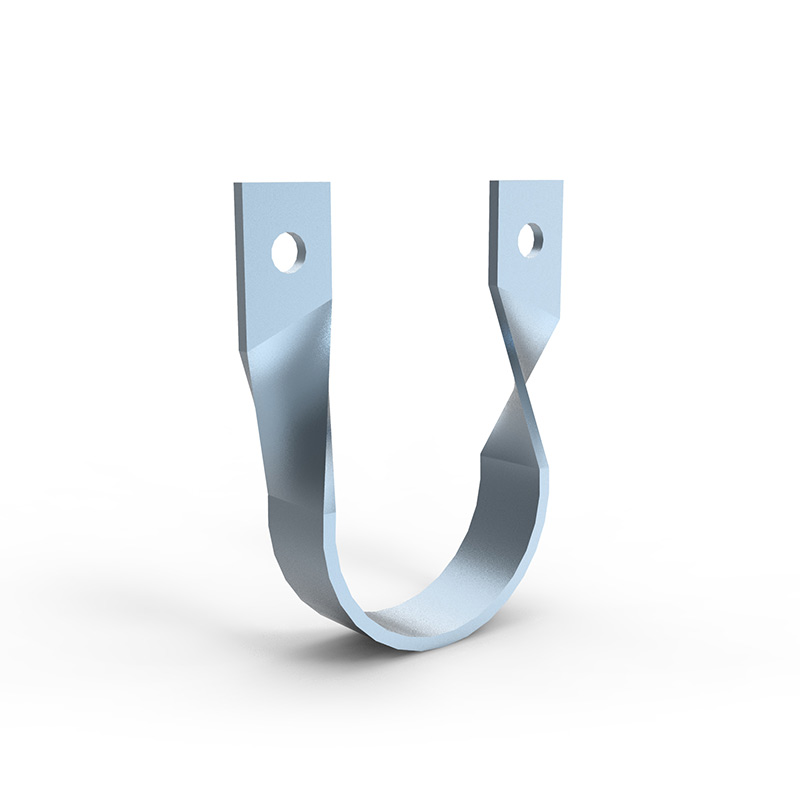
Every single minute counts heavily in fast-paced construction and modern fabrication shops. Hidden labor costs continuously drain operational budgets due to frequent joint misalignment, sudden tool slippage, and completely inefficient clamping during high-volume assemblies. Shop managers unfortunately overlook these subtle productivity leaks every day. Standard hand tools consistently fail to secure heavy materials perfectly right out of the gate. You constantly encounter frustrating clearance bottlenecks and complex right-angle holding issues. These daily obstacles force skilled workers to readjust their grips constantly and waste valuable floor time. Enter the UTT60 90-degree twist clamp. We recognize it not as a basic hand tool, but as a specialized workflow optimization asset. It expertly solves specific tight-clearance bottlenecks securely. Upgrading to specialized twist clamps requires a thoughtful upfront investment. However, it yields highly measurable returns in setup speed, pristine joint accuracy, and significantly reduced rework. You will quickly learn how this implementation transforms daily operations.
Key Takeaways
Precision Under Load: The rotational mechanics of the 90° Twist Clamp eliminate the "jaw walk" typically associated with traditional C-clamps, maintaining true alignment.
Labor Efficiency: Single-handed operation and rapid deployment reduce setup time per joint, scaling into significant labor savings across large framing or fabrication projects.
Pragmatic Adoption: While highly effective for structural welding, cabinetry, and trim work, its heavier build requires selective deployment rather than total tool-crib replacement.
Durability vs. Cost: Sandblasted, industrial-grade construction ensures longevity, justifying the higher per-unit cost through reduced replacement cycles.
The Hidden Costs of Inefficient Clamping in Production
Standard clamps often twist dangerously during high-torque applications. They push materials out of strict alignment just before you strike an arc or drive a fastener. This creates a severe business problem across your entire production floor. Production teams face mounting operational bottlenecks when joints lose their precise squareness. Rework destroys profit margins quickly on large-scale fabrication jobs. You simply cannot afford holding tools failing under maximum load. Standard options lack the robust stability required for modern, fast-paced industrial environments. They flex under pressure. They slip off critical edges. They ultimately ruin expensive raw stock.
Labor waste accumulates silently but aggressively across the shop floor. Operators often use two hands just to stabilize a joint while tightening the screw. They build complicated makeshift jigs for simple 90-degree corners. We calculate this lost time in precious seconds per joint. Over a long demanding shift, these seconds become hours of lost productivity. Multiply this exact loss by a crew of twenty active workers. You quickly see massive financial bleed draining your resources. Manual adjustments stall project momentum instantly. Your highly skilled fabricators spend more time wrestling awkward tools than actually building profitable products.
Any new holding solution must prove its financial worth before final procurement. You should demand specific success criteria from any equipment upgrade. We look for four non-negotiable performance metrics:
Repeatability: The tool must perform consistently across hundreds of grueling production cycles.
Rapid Engagement: Operators need lightning-fast deployment to minimize redundant handling time.
Even Pressure Distribution: It must secure workpieces tightly without marring delicate visible surfaces.
Minimal Deflection: The jaw frame should remain perfectly rigid under maximum applied load.
Meeting these criteria ensures a tool actually improves your workflow rather than complicating it.
How the UTT60 90° Twist Clamp Re-Engineers Joint Setup
The twist design introduces a fundamental mechanical shift in how you secure materials. Traditional straight handles hit structural barriers constantly during everyday use. You try to turn the main handle, but a wall or steel beam blocks your knuckles entirely. The 90-degree twist handle changes this frustrating dynamic completely. You rotate it perpendicular to the main clamping axis. This specific orientation allows maximum torque application in extremely confined spaces. It slides into exceptionally tight clearances effortlessly. You maintain strong physical leverage where standard tools fail completely.
Let us break down the core engineering features and their direct shop-floor outcomes:
Feature: Parallel jaw alignment achieved via specialized twist-action mechanics.
Outcome: It prevents material marring and completely eliminates harmful lateral torque. Joints never push out of square during the crucial final tightening phase.
Outcome: The textured finish resists hot weld spatter adherence naturally. It withstands harsh, dirty job site environments effortlessly for many years.
This intelligent design offers immense cross-trade versatility. It bridges a massive capability gap in the modern construction industry. Precise woodworking requires delicate, perfectly square holds for high-end trim and custom cabinetry. Heavy-duty construction demands rigid structural strength for metal fabrication and pipe welding. You get both distinct capabilities in one robust package. You do not need entirely separate tool sets for different specialized trades. The tool adapts safely to your immediate project needs perfectly.
Evaluating the 90° Twist Clamp Against Standard Alternatives
Let us compare this upgraded holding tool against common industry mainstays. Standard C-clamps deliver exceptionally high crushing pressure. However, they suffer greatly from chronic off-center loading. Their spinning pads wander noticeably as you apply heavy torque. This lateral wandering scratches bare metal and misaligns delicate wood joints. Our recommended 90° Twist Clamp distributes physical load evenly directly across the pad. It stops wandering completely. You achieve true perpendicular alignment every single time.
F-style bar clamps offer distinct operational advantages in pure speed. They provide deep reach for large wooden panels. Yet, they flex dangerously under heavy structural loads. Their flat steel bars bow outward when you need rigid holding power. The UTT60 delivers vastly superior rigidity. It refuses to deflect even under extreme tension. You get absolute mechanical confidence when welding heavy steel frames together.
We must maintain transparent assumptions regarding equipment limitations. The UTT60 represents a definitively higher per-unit initial cost. It also carries noticeably more physical weight than basic lightweight alternatives. Engineers designed it explicitly for critical joints and complex tight-clearance operations. You should not treat it as a lightweight, disposable solution for simple tacking jobs. It serves a highly specialized purpose. Use it strategically where pure precision dictates absolute success.
Clamping Solutions Comparison Chart
Tool Classification
Torque Application Style
Deflection Risk Level
Clearance Adaptability
Standard C-Clamp
In-line screw (causes wandering)
Low to Medium
Poor (handles hit barriers)
F-Style Bar Clamp
Sliding arm with parallel screw
High (bar bends easily)
Moderate (long bars protrude)
UTT60 Twist Clamp
Perpendicular 90-degree twist
Extremely Low
Excellent (fits tight corners)
Implementation Considerations and Adoption Risks
Rolling out new high-end equipment requires a highly strategic approach. We strongly recommend testing a small pilot batch first. Order 10 to 20 units strictly for your main fabrication shop. Let your most experienced welders and master carpenters use them daily. Gather their honest, unfiltered feedback immediately. This localized testing identifies specific specialized workflows benefiting most from the upgrade. Do not push them to remote on-site field crews immediately. Let the controlled shop environment define your best practices first.
You must address ergonomic and operator physical factors proactively.
Identified Risk: The added metal weight causes muscle fatigue during prolonged overhead clamping tasks. Operators tire noticeably faster when holding heavier tools above their shoulders repeatedly.
Risk Mitigation: Train operators thoroughly on the unique twist mechanism. Show them how minimal handle rotation generates massive holding pressure. Prevent them from habitually overtightening. Overtightening easily crushes softer building materials. Always mandate soft protective pads for delicate trim work.
Integrating these specific tools into your main crib requires clear operational procedures. Phase out your severely damaged legacy tools gradually. Replace bent or severely stripped C-clamps systematically over several months. Integrate the new units directly into standardized operating procedures. Mandate their specific use for strict right-angle tasks like complex stair-tread installation. Require them explicitly for structural beam tacking where exact alignment remains completely non-negotiable.
Shortlisting Logic and Next-Step Actions
Procurement managers need a solid ROI calculation framework to justify purchases. We look strictly at direct labor savings. Multiply "time saved per joint" by "total joints per shift". Determine your exact hourly shop rate. This incredibly simple equation reveals your payback period quickly. For example, saving just two minutes per corner on a 100-joint project yields over three hours of highly profitable saved labor. The 90° Twist Clamp effectively pays for itself in just a few busy shifts.
Vendor evaluation plays a highly critical role here. You must source reliable heavy-duty equipment. Look carefully for strong warranty terms covering catastrophic structural failure. Ask specific questions about bulk pricing tiers for commercial accounts. Verify the ongoing availability of consumable replacement parts. Contact pads and rotating handles wear out eventually. You absolutely need a supplier who stocks these necessary consumables locally.
Your immediate next step involves initiating a localized live field test. Compare your newly acquired tool side-by-side against your current favorite shop clamp. Choose a highly demanding, tight-clearance task for this evaluation. Measure the exact time difference meticulously. Check the final joint accuracy using a verified precision square. The resulting physical data will confidently guide your broader shop procurement strategy.
Conclusion
The UTT60 acts as a highly specialized, high-yield asset for modern fabricators. It forcefully overcomes frustrating clearance issues daily. It expertly maintains strict 90-degree joint tolerances without slipping. We know it will not replace every single cheap clamp on your bustling job site. However, its strategic inclusion in your daily workflow eliminates the absolute most frustrating bottlenecks in precision assembly.
Deploy the twist mechanism specifically for confined-space assembly tasks.
Calculate your exact labor savings based on reduced alignment rework.
Train your shop crews to apply torque smoothly without crushing delicate materials.
Initiate a pilot testing program before outfitting your entire remote field fleet.
FAQ
Q: What materials is the UTT60 90° Twist Clamp best suited for?
A: The tool excels on heavy structural steel, dense hardwoods, and rigid composites. Its robust frame handles high-torque welding applications easily. For delicate surfaces like finished cabinetry or softwoods, you must apply protective soft-pads. The immense pressure will otherwise dent softer materials during tightening.
Q: How does the 90-degree twist handle improve tight-space operation?
A: Traditional straight handles require generous clearance parallel to the clamping axis. If a wall sits behind the tool, you cannot turn it. The perpendicular 90-degree twist handle operates from the side. You rotate it smoothly without ever banging your knuckles against surrounding structural barriers.
Q: Can the UTT60 withstand welding heat and spatter?
A: Yes. Engineers designed it explicitly for heavy fabrication environments. The rugged sandblasted finish actively resists hot weld spatter adherence. Spatter simply brushes off rather than fusing to the metal. You only need basic occasional oiling of the threads to maintain perfectly smooth operation.
Q: Is the clamping pressure adjustable for delicate trim work?
A: Yes. The specialized twist mechanism provides highly sensitive tactile feedback. You feel the exact pressure building incrementally. This fine control allows operators to secure delicate trim pieces firmly without crushing the grain. We recommend pairing it with protective jaw covers for ultimate surface protection.
Utterly TY Intelligent Technology Co.,Ltd. is a high-tech private enterprise integrating product design, research and development, sales and installation.