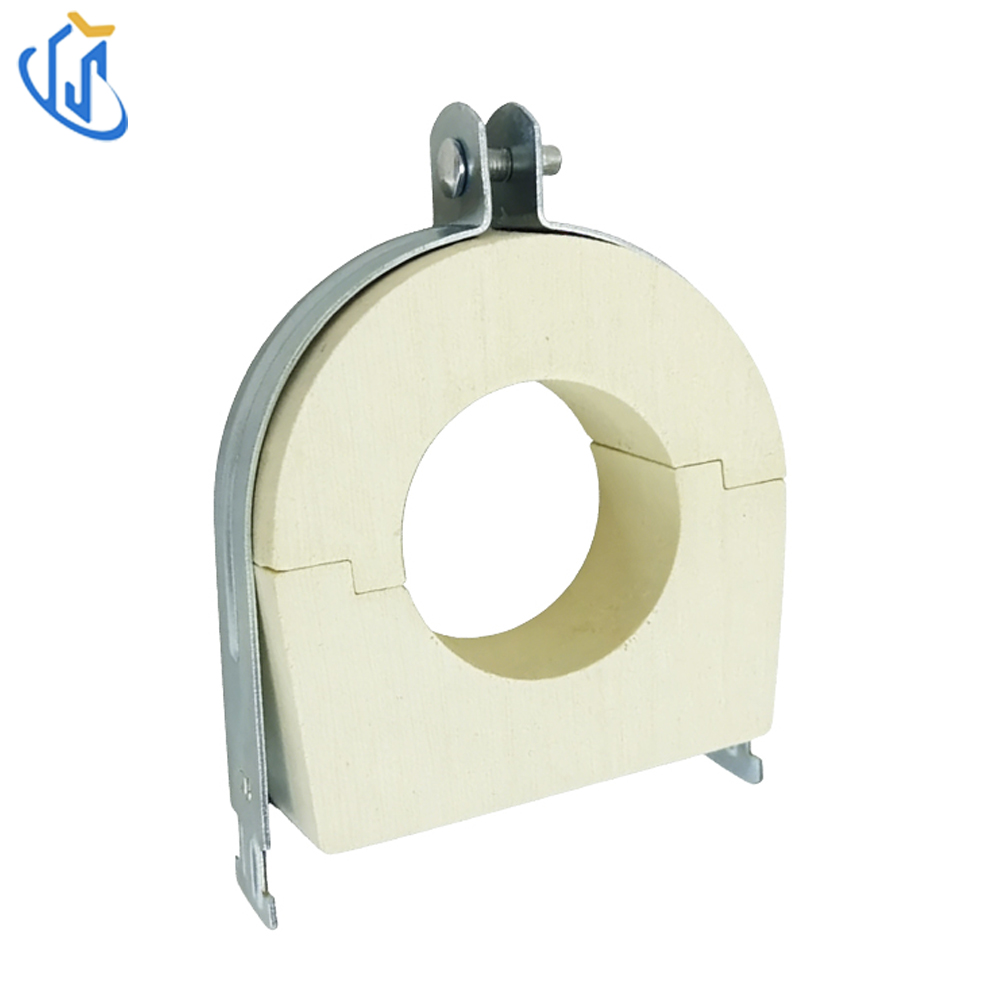
Commercial HVAC setups and data center cooling networks face a relentless enemy. Pipe supports often act as the absolute weakest link in chilled water insulation systems. Standard supports end up crushing conventional insulation materials under heavy loads. This compression creates active thermal bridges, commonly known as cold bridges, along the pipeline. Such vulnerabilities lead directly to localized condensation, persistent dripping, and eventually severe Corrosion Under Insulation (CUI).
Upgrading to high-density polyurethane (PU) insulated clamps offers a heavily engineered solution to this systemic flaw. We will explore how these robust supports maintain continuous vapor barriers and deliver load-bearing thermal resistance. You will learn the physics behind cold bridges and how to specify the right anti-cold bridge supports for your next project.
Key Takeaways
Traditional pipe supports compromise insulation thickness, directly causing thermal bridging and condensation in chilled water lines.
High-density PU blocks provide the necessary compressive strength to bear heavy pipe loads without sacrificing thermal resistance.
A fully integrated PU Insulated Chilled Water Pipe Clamp preserves the vapor barrier, preventing moisture ingress and subsequent CUI.
Evaluating PU clamps requires verifying foam density, fire retardant ratings, and seamless compatibility with the surrounding elastomeric or fiberglass insulation.
Proper installation—specifically sealing the joints—is the deciding factor between a successful anti-cold bridge system and a compromised one.
The Physics of Cold Bridges at Support Points
Understanding the exact failure mechanisms of traditional pipe supports is critical. Insulation materials rely on trapped air or gas within their cellular structure. This trapped air resists heat transfer. However, materials like standard elastomeric foam or fiberglass lack structural rigidity. When you place a heavy, water-filled steel pipe onto a standard clevis hanger, gravity does its work. The pipe weight compresses the insulation at the support point. The material loses its thickness. It loses its trapped air. Consequently, it loses its ability to insulate.
Failure Mechanism and The Dew Point Reality
This compression forms a direct thermal pathway. Engineers call this a thermal bridge or cold bridge. Cold energy from the 42°F (5.5°C) chilled water transfers directly through the crushed insulation. It reaches the metal hanger or strut clamp. The surface temperature of the metal support rapidly plummets. Soon, this surface temperature drops below the ambient dew point of the surrounding mechanical room.
When warm, humid air contacts this freezing surface, condensation is inevitable. The surrounding moisture condenses into liquid water. It begins to sweat, pool, and drip. You cannot stop this physical reaction once the insulation loses its structural integrity. The R-value drops aggressively. Sweating brackets become a permanent feature of the facility.
Cascading Business Impacts
Continuous condensation creates devastating cascading effects across commercial facilities. Water dripping from compromised supports damages sensitive facility infrastructure. In a data center environment, a single drop of water on a server rack can trigger catastrophic downtime. Unchecked moisture also leads to toxic mold growth inside ceiling cavities. Mold remediation requires expensive, specialized labor and forces facility closures.
Furthermore, condensation attacks the piping itself. Moisture wicks under the adjacent, uncrushed insulation. This trapped water reacts with oxygen and the metal pipe. It triggers Corrosion Under Insulation (CUI). CUI remains hidden from visual inspection. It aggressively degrades the pipe wall thickness. Eventually, CUI causes complete pipe ruptures. Repairing CUI requires shutting down the entire cooling network, draining the system, and replacing large sections of steel piping.
Why the PU Insulated Chilled Water Pipe Clamp Outperforms Alternatives
Engineers need a material strong enough to support heavy pipes, yet resistant to heat transfer. High-density polyurethane (PU) delivers this precise combination. PU foam utilizes a closed-cell matrix. This structure locks insulating gases tightly inside microscopic bubbles. When manufactured at high densities, these cellular walls become rigid enough to support massive industrial loads.
Material Science: The PU Advantage
The core advantage lies in dual-action performance. Polyurethane offers extremely low thermal conductivity. It prevents heat from migrating into the chilled water line. Simultaneously, it boasts immense compressive strength. A proper PU Insulated Chilled Water Pipe Clamp easily bears the weight of large-diameter steel pipes full of water. The block does not crush. The insulation thickness remains constant across the entire support bracket. You completely eliminate the cold bridge.
Comparison vs. Treated Wood Blocks
Historically, contractors used treated wood blocks at support points. Wood certainly bears heavy weights without crushing. However, wood acts as a poor insulator. Its thermal resistance pales in comparison to high-density PU. Furthermore, wood is an organic, porous material. Over time, wood absorbs moisture from the humid air. As it absorbs water, its already poor insulating properties degrade further. Wet wood eventually rots. It splinters under pressure. It also serves as a perfect breeding ground for mold spores. PU foam, being a synthetic closed-cell plastic, remains structurally and thermally stable for decades.
Comparison vs. Rubber-Lined Clamps
Many contractors attempt to use standard rubber-lined clamps. These clamps feature a thin strip of EPDM rubber inside the metal ring. The rubber lining successfully dampens acoustic vibrations. However, it fails completely as a thermal break. The rubber strip is simply too thin to provide adequate R-value for deep-chilled systems. The cold temperature easily bypasses the thin rubber. The exterior metal clamp sweats aggressively. You must use a properly sized PU block to stop thermal bridging.
To clarify these differences, review the performance comparison chart below.
Performance Metric
High-Density PU Block
Treated Wood Block
Rubber-Lined Clamp
Thermal Conductivity
Extremely Low (Excellent)
High (Poor)
High (Poor)
Compressive Strength
High (Load-bearing)
Very High
Low (Crushes easily)
Moisture Resistance
Closed-cell (Zero absorption)
Absorbs water over time
Waterproof, but too thin
Condensation Risk
None (Zero cold bridges)
High (Thermal bridging occurs)
Very High (Exterior sweating)
Key Evaluation Criteria for Anti-Cold Bridge Supports
Not all polyurethane supports perform equally. Specifying the correct PU Insulated Chilled Water Pipe Clamp requires careful evaluation. You must match the physical properties of the clamp to the specific demands of your cooling network. Follow these structured evaluation steps.
Verify Density and Load Capacity: Density dictates strength. PU density typically ranges from 70 to 300 kg/m³. A small copper refrigeration line might only need a 70 kg/m³ block. A massive 12-inch chilled water main requires 300 kg/m³ density. You must calculate the total operating weight. Include the steel pipe, the water inside, and the hanger spacing distances. Match this total load to the manufacturer's density charts.
Inspect Vapor Barrier Integration: The PU block itself prevents heat transfer. However, water vapor constantly seeks ways to penetrate insulation. The block must feature a factory-applied, continuous vapor retarder. Look for heavy-duty aluminum foil or reinforced PVC facings. This facing stops moisture transmission through the block assembly.
Check Fire and Smoke Compliance: Commercial building codes strictly regulate materials installed in return-air plenums. You must verify regional compliance standards. Look for ASTM E84 or UL 94 certifications in North America. Look for EN 13501-1 in Europe. The PU formulation must prove a low flame spread index and low smoke development.
Confirm Dimensional Accuracy: Tolerance matters. The inner diameter of the PU clamp must perfectly hug the bare steel pipe. The outer diameter must precisely match the thickness of the adjacent elastomeric or fiberglass insulation. Even a small millimeter gap creates an air pocket. Humid air enters this gap, condenses, and starts the CUI cycle.
Implementation Realities and Installation Risks
Even the highest-quality PU block will fail if installed incorrectly. Installation execution determines the long-term success of the entire chilled water network. Contractors must respect the strict installation protocols for cold systems.
The Joint Sealing Imperative
The most critical installation step involves sealing the joints. A split-ring PU block has longitudinal joints where the two halves meet. It also has butt joints where the block meets the adjacent pipe insulation. These seams represent severe vulnerabilities. You must hermetically seal every single joint. Apply approved vapor barrier mastic generously inside the joints before closing the block. Once closed, wrap the exterior seams with specialized vapor barrier tape. If you skip the mastic, humid air will find the seam. Moisture will penetrate, freeze, expand, and blow the insulation apart from the inside.
Alignment and Load Distribution
Point-loading destroys systems. When a narrow metal strut clamp bites into a PU block, it concentrates massive weight onto a tiny surface area. To prevent point-loading damage, you must distribute the weight. Pair the PU insulated clamps with heavy-duty protective saddles. Use galvanized or stainless steel saddles that wrap around the lower half of the PU block. The saddle flares outward, spreading the pipe's weight evenly across the entire hanger bracket.
Overcoming Adoption Friction
Procurement teams sometimes push back against PU clamps due to initial material costs. They often compare the price of a highly engineered PU block to a cheap piece of treated wood. However, you must consider the labor reality. Installers spend hours custom-cutting wood blocks on site. PU clamps arrive factory-cut, sized perfectly, and ready to install. This massive labor savings quickly offsets any initial material premium. Furthermore, utilizing proper PU clamps eliminates expensive callbacks. You will not have to rip down ceilings to fix condensation leaks a year later.
Best Practices for Installers
Always stagger the butt joints of the adjacent pipe insulation away from the PU block joints.
Never use standard duct tape; only use zero-permeability foil tapes matched to the vapor barrier facing.
Ensure the steel saddle extends at least two inches beyond the edges of the strut support.
Wipe the pipe surface clean of dust and oils before applying the bottom half of the PU block.
Shortlisting Logic and Long-Term ROI
Selecting the right components for chilled water infrastructure requires a strategic approach. Facility managers must look beyond simple material acquisition. The goal is building a cooling network that operates flawlessly for thirty years. Upgrading your pipe supports fundamentally secures the reliability of your entire system.
Vendor Selection Criteria
Procurement teams must evaluate vendors strictly on technical transparency. Do not buy generic foam blocks. Look for manufacturers that publish clear, comprehensive load-bearing charts. You need independent thermal testing data verifying the R-value at specific densities. The best vendors offer custom sizing. Many industrial projects utilize unique metric or imperial pipe schedules. You need a vendor capable of machining the PU block to your exact required tolerances, ensuring zero air gaps.
Immediate Next Steps
Engineers and facility managers should actively audit their current chilled water specifications. Open your master design documents. Ensure the specifications explicitly forbid wood blocks and thin rubber clamps for cold-line supports. Request technical data sheets from reputable PU clamp manufacturers. Ask for physical product samples. Hold the block in your hand, inspect the vapor barrier facing, and test the density before deploying them on your next critical infrastructure project.
Conclusion
Condensation is never an inevitable byproduct of running chilled water systems. Sweating pipes and dripping hangers indicate a fundamental engineering flaw. You can completely solve this problem by maintaining continuous insulation and utilizing load-bearing thermal breaks. Standard supports crush insulation, create cold bridges, and guarantee eventual corrosion.
High-density polyurethane solves this physics problem. It delivers immense compressive strength alongside incredible thermal resistance. To protect your facilities from water damage and CUI, take immediate action. Audit your pipe support specifications today. Mandate strict joint sealing protocols for your installation teams. Contact technical sales experts to acquire precise sizing charts, material specifications, and accurate quotes for your upcoming HVAC or industrial cooling rollout.
FAQ
Q: What is an anti-cold bridge pipe clamp?
A: An anti-cold bridge pipe clamp is a support mechanism engineered with rigid, thermally resistant materials. It uses high-density PU to prevent the transfer of cold temperatures from the pipe to the exterior metal hanger. This thermal break stops condensation from forming on the support bracket.
Q: How do you size a PU insulated chilled water pipe clamp?
A: Sizing a PU Insulated Chilled Water Pipe Clamp requires two critical measurements. You need the exact outer diameter (OD) of the bare steel pipe. You also need the specified thickness of the surrounding pipe insulation. These precise measurements ensure a flush, seamless fit with zero air gaps.
Q: Can polyurethane pipe supports be used outdoors?
A: Yes, you can use them outdoors. However, they must be properly shielded. You need to apply an appropriate UV-resistant and weatherproof jacketing, such as aluminum or specialized PVC cladding. This protection prevents UV degradation and stops weather intrusion into the foam matrix.
Q: Are PU insulated clamps suitable for deep cryogenic applications?
A: While excellent for chilled water and standard refrigeration, deep cryogenic lines often require different solutions. Extreme cold environments usually demand specialized high-density PIR (Polyisocyanurate) blocks or specific multi-layered designs. These advanced materials safely handle the extreme thermal contraction associated with cryogenic fluids.
Utterly TY Intelligent Technology Co.,Ltd. is a high-tech private enterprise integrating product design, research and development, sales and installation.