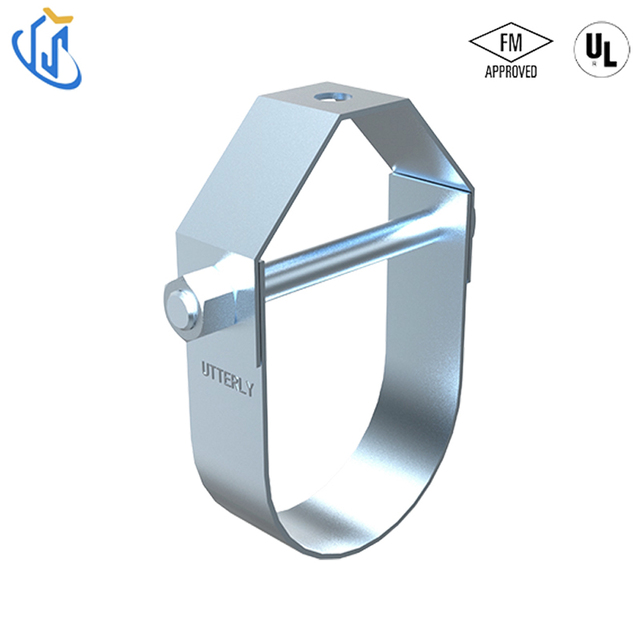
In high-load industrial, HVAC, or fire protection systems, underspecified piping supports lead to structural fatigue, system downtime, and severe safety hazards. Operating at this massive scale demands absolute precision engineering. When dealing with extreme weights and pressures, relying on standard commercial supports practically guarantees eventual system failure. Moving beyond basic supports requires evaluating complex dynamic loads, sudden thermal movement, and strict regulatory compliance. You must treat pipeline suspension as a critical structural component rather than an afterthought.
This guide breaks down the technical criteria for evaluating, shortlisting, and specifying the correct heavy duty hangers for critical infrastructure. We outline exactly how to match unique suspension mechanisms to specific physical forces acting on your pipelines. You will also learn to navigate material choices, interpret load ratings, and apply essential safety codes seamlessly.
Key Takeaways
Selecting heavy duty hangers requires matching the support mechanism to the specific physical forces of the pipeline (vertical static loads, thermal expansion, or vibration).
Clevis and swivel hangers handle heavy static and dynamic suspension, while pipe roller chairs are mandatory for mitigating high-friction thermal movement.
Compliance with industry standards (e.g., MSS SP-58, ASME, NFPA) and proper material selection (preventing galvanic corrosion) are non-negotiable for system longevity.
Accurate specification requires mapping pipe size, operating temperature, load capacity, and environmental exposure before vendor engagement.
Defining "Heavy Duty" in High-Load Piping Systems
Standard hangers simply fail under the extreme stress of large-diameter pipes. These heavy pipelines carry dense fluids like water, chemicals, or pressurized steam. They often operate under extreme stress. You cannot rely on lightweight hardware for such demanding applications. Undersized brackets will bend, sheer, or detach from the ceiling entirely. A successful heavy-duty specification must account for three primary physical forces. Engineers use these objective baselines to determine exact support requirements.
Dead Weight (Static Load): This represents the constant downward gravitational force. It combines the weight of the bare pipe itself and the internal fluid volume. You must also add the weight of thick insulation jackets, heavy inline valves, and any attached flanges. You cannot calculate static load using empty pipe measurements alone.
Dynamic Forces: Industrial systems rarely remain entirely entirely still. Fluid surges and water hammer effects introduce sudden, violent shocks to the system. Seismic activity can also cause unpredictable multi-directional swaying. Furthermore, continuous operational vibration from massive attached pumps adds severe cyclic stress over time.
Thermal Expansion and Contraction: Severe temperature differentials in the transported medium cause significant physical movement. Metal pipes physically grow when carrying high-temperature steam. They shrink when transporting chilled liquids. Supports must accommodate this horizontal or longitudinal shift. If they remain entirely rigid, the expanding pipe will literally tear the hangers from their anchors.
Comparing Core Solutions: Types of Heavy Duty Hangers
You must categorize specific hanger types by their primary engineering application. This approach greatly aids in accurate decision-making. Different operational forces demand distinctly different mechanical solutions. We will evaluate the three most critical suspension mechanisms used in heavy infrastructure.
Clevis Pipe Hanger
The Clevis Pipe Hanger serves as the industry standard for suspending heavy stationary pipelines. You will typically use this solution for large uninsulated lines or heavily insulated configurations. It handles massive vertical loads efficiently.
When applying your evaluation lens, focus heavily on post-installation vertical adjustment. This feature proves invaluable when leveling long pipe runs across uneven ceilings. You must critically evaluate the bottom yoke design and the cross-bolt thickness. These two specific components determine the true load-bearing capability. This bracket performs best for static loads where horizontal movement remains absolutely minimal. Do not use this solution if your system experiences severe thermal sliding.
Swivel Pipe Hanger
You should specify a Swivel Pipe Hanger in environments requiring high vibration resistance. This design also provides excellent alignment flexibility during complex installations. It shines in dynamic environments.
The core evaluation lens here centers on the swivel ring mechanism itself. This unique design allows the pipe to self-align during initial installation. It also accommodates minor operational shifting smoothly. This flexibility significantly reduces torsional stress acting on the primary building structure. When reviewing product specifications, you must evaluate the locknut mechanism's reliability. The locknut must remain securely fastened under continuous, heavy vibration from attached machinery.
Pipe Roller Chair
The Pipe Roller Chair is completely mandatory for heavy systems subject to significant longitudinal movement. You will see these utilized extensively on steam lines, hot water systems, and outdoor chemical runs. Thermal expansion dictates their usage.
Your evaluation lens must focus on friction reduction. A roller chair physically rolls alongside the expanding pipe. This eliminates the grinding friction between the heavy pipe and the stationary support structure. You need to evaluate the specific load rating of the cast iron or carbon steel roller itself. Additionally, you must assess the central axle's resistance to seizing. If you operate in a corrosive environment, a rusted axle will stop rolling, defeating the product's entire purpose.
Key Evaluation Criteria for Specification and Shortlisting
You must translate complex system requirements into exact product features. Relying on basic dimensional fit is highly dangerous. You need to scrutinize load capacities, material science, and temperature boundaries.
Load Ratings & Safety Factors
You need to know exactly how to read manufacturer load tables. Do not just look at the highest number printed on the page. Emphasize the vital importance of built-in safety margins. You must understand the difference between yield strength and ultimate tensile strength. Yield strength marks the exact point where a metal hanger permanently deforms. Ultimate tensile strength marks the point where it completely snaps. Always specify products based on their safe working load, which incorporates a generous safety factor below the actual yield point.
Material Compatibility & Corrosion Resistance
Selecting the wrong material will destroy your suspension system rapidly. You must choose between plain carbon steel, hot-dipped galvanized finishes, and stainless steel grades like 304 or 316. You base this choice entirely on environmental exposure. Indoor climate-controlled areas can utilize plain carbon steel. Outdoor or high-humidity zones require hot-dipped galvanized protection. Marine and harsh chemical environments strictly demand marine-grade stainless steel.
Risk mitigation regarding dissimilar metals requires extreme caution. Galvanic corrosion occurs rapidly when two mismatched metals touch each other in a moist environment. For example, suspending a copper pipe using a bare carbon steel bracket will cause rapid structural decay. You mitigate this serious danger by using specialized isolation pads. You can also require specific epoxy or rubberized coating requirements to create a physical dielectric barrier.
Hanger Material Application Matrix
Material Type
Primary Operating Environment
Corrosion Resistance Level
Plain Carbon Steel
Indoor, dry, climate-controlled facilities
Low (Requires primer or paint)
Hot-Dipped Galvanized
Outdoor, high humidity, mild industrial
Medium to High
304 Stainless Steel
Food processing, washdown zones
High
316 Stainless Steel
Marine environments, heavy chemical plants
Maximum
Temperature Constraints
You must accurately match hanger material limitations to the internal operating temperature of the pipeline. Extreme heat can weaken standard carbon steel over time. Conversely, cryogenic freezing applications cause standard metals to become highly brittle. Always verify the manufacturer's maximum and minimum temperature ratings before finalizing your specification sheet.
Compliance, Safety Standards, and Implementation Risks
Establishing true operational safety requires compliance-aware thinking. You cannot bypass established industry codes when dealing with thousands of pounds of overhead weight. Regulatory bodies mandate specific testing protocols for a reason.
Relevant Industry Standards
The MSS SP-58 standard serves as the absolute baseline for pipe hangers and supports. This crucial document dictates strict requirements for manufacturing materials, design geometry, and structural testing. When you request product submittals, you must verify MSS SP-58 compliance immediately.
For life safety applications, NFPA codes dictate specific requirements. Heavy duty hangers used in fire sprinkler systems must undergo rigorous third-party evaluation. You must ensure the products carry official listing and approval markings, such as UL or FM global certifications. An unlisted bracket installed on a fire main violates building codes and voids facility insurance.
Implementation Realities
Improper installation ruins perfect engineering. You must acknowledge the severe risks of improper hanger spacing. Spacing supports too far apart causes the heavy pipe to sag in the middle. This sagging leads to fluid pooling, increased internal pressure, and eventual joint rupture.
Furthermore, you must conduct thorough structural attachment assessments. A heavy-duty bracket is utterly useless if the concrete ceiling above it fails. You must ensure the chosen steel beam or engineered concrete insert can actually hold the concentrated point load. Never attach a massive load to a lightweight roof truss.
Procurement Checklist: Next Steps for Securing Your Hangers
You need tight shortlisting logic before contacting a supplier. Preparing accurate data ensures you receive exactly what your system demands. Vague requests lead to dangerous assumptions.
Required Data Points
Exact Outer Diameter (OD): You must provide the true outer diameter of the pipe. Critically, you must include the full thickness of any exterior thermal insulation. A bracket sized for a bare pipe will completely crush an insulated line.
Maximum Operating Parameters: Document the peak internal operating temperature and maximum fluid pressure. Suppliers need these metrics to verify material integrity.
Calculated Load Per Support: You must calculate the maximum load resting on each individual support point. You determine this by dividing the total pipeline weight by the total number of suspension anchors.
Environmental Conditions: Clearly state the exact environmental conditions dictating material finishes. Specify if the area experiences saltwater spray, chemical fumes, or extreme humidity.
Actionable Advice
We strongly recommend working exclusively with suppliers who provide certified load testing documentation. You should always demand comprehensive engineering submittals before issuing a purchase order. Legitimate manufacturers will happily supply detailed dimensional drawings and material certs for every product.
Conclusion
Choosing the proper suspension hardware remains a precise, unforgiving engineering decision. The combination of total load, dynamic movement, and environmental exposure entirely dictates your solution. You must actively choose between rigid support, flexible alignment, or thermal mitigation. Never guess when thousands of pounds hang overhead. You should always consult your primary structural engineer to verify load paths. Finally, meticulously review detailed manufacturer specification sheets to finalize your official bill of materials safely.
FAQ
Q: How do I calculate the maximum load for a heavy duty pipe hanger?
A: You must sum the total weight of the pipe, the maximum internal fluid volume, and all exterior insulation. After calculating this base weight, apply standard safety factors as dictated by the MSS SP-58 framework. You must also account for attached heavy valves. Accurate load calculation ensures the selected support mechanism operates safely within its designated yield strength limits.
Q: What is the maximum recommended spacing for heavy-duty pipe supports?
A: Spacing depends entirely on the specific pipe material, the outer diameter, and the weight of the fluid contents. Standard steel pipes span further than heavy ductile iron or flexible plastics. You must direct your engineering team to consult ASME B31 standards. These codes provide precise, legally recognized maximum span tables for every material classification.
Q: When should I choose a pipe roller chair over a standard clevis hanger?
A: You must choose a roller chair whenever severe thermal expansion causes horizontal or longitudinal pipe movement. High-temperature steam or hot water lines expand significantly during operation. This intense physical growth would quickly shear, bend, or permanently fatigue a rigid bracket. The roller allows the heavy pipe to expand smoothly without friction.
Q: Do heavy duty hangers require specific structural attachments?
A: Yes. The suspension hardware is only as strong as its overhead anchor. You cannot use standard drywall toggles for high-load pipelines. You must specify heavy-duty steel beam clamps, fully welded structural brackets, or deeply embedded engineered concrete inserts. A structural engineer must verify that the building structure can actually hold the concentrated load.
Utterly TY Intelligent Technology Co.,Ltd. is a high-tech private enterprise integrating product design, research and development, sales and installation.