Premature hanger failure due to corrosion often leads to catastrophic pipe stress. It creates severe safety hazards and causes costly facility downtime. Conversely, over-specifying corrosion protection bloats project budgets unnecessarily. Selecting the right protective finish for metal hangers is rarely a simple preference. You must dictate this choice by environmental corrosivity, mechanical tolerances, and load-bearing requirements. This guide provides an evidence-based framework to evaluate Zinc-Plated (electrogalvanized) versus Hot-Dip Galvanized (HDG) finishes. You will learn how to ensure compliance, maximize longevity, and maintain mechanical efficiency in your pipe support systems.
Key Takeaways
Coating Thickness Dictates Usage: Zinc plating offers a thin (typically 0.2–0.5 mils), uniform coat ideal for indoor, climate-controlled environments. HDG provides a rugged, thick metallurgical bond (often 2.0+ mils) necessary for harsh outdoor or industrial exposure.
Tolerance and Thread Compatibility: The thick coating of HDG requires over-tapped nuts and specific thread allowances, whereas zinc plating maintains standard machining tolerances without adjustment.
Bimetallic Risk: Both finishes require isolation (such as neoprene liners) when supporting dissimilar metals like copper to prevent galvanic corrosion.
The Baseline Problem: Why Finish Matters for Metal Hangers
Specifying the right finish ensures structural integrity over a project's designed lifespan. Engineers rely on specific success criteria when selecting metal hangers for piping systems. These criteria include compliance with stringent engineering codes, such as MSS SP-58, and maintaining predictable maintenance cycles. If you choose an inadequate finish, the entire piping infrastructure becomes vulnerable.
Environmental degradation poses a constant threat to raw carbon steel. Moisture, chemical vapors, and coastal salt exposure actively attack unprotected metal. When water and oxygen touch bare steel, an electrochemical reaction occurs. This reaction forms iron oxide, commonly known as rust. Rust weakens the steel and causes it to expand. This expansion creates immense pressure on threaded joints and bolted connections. Eventually, the support fails.
Zinc plays a critical role in preventing this failure. Both electroplating and hot-dip processes use zinc for its unique electrochemical properties. Zinc provides cathodic protection through a sacrificial galvanic action. Because zinc is more electrochemically active than steel, it readily gives up its electrons. The zinc coating corrodes first, actively sacrificing itself to protect the underlying steel substrate. This protective mechanism works regardless of the application method. However, the application method determines how long the protection lasts.
Zinc plating, also known as electrogalvanizing, relies on a precise electrical process. Manufacturers submerge steel components in a specialized chemical bath containing dissolved zinc salts. They introduce an electrical current into the solution. This current forces zinc ions to bond to the steel surface. The process deposits a very thin, highly uniform layer of zinc. Most industrial applications adhere to ASTM B633 standards for this method.
This process offers several primary advantages for indoor applications:
Aesthetic Appeal: The finish appears smooth, bright, and visually pleasing.
Precision Fits: It preserves tight mechanical tolerances. This trait is crucial for fine threads on rods and bolts.
Procurement Efficiency: The process requires less energy and raw material, resulting in a lower upfront procurement cost.
Despite these benefits, zinc plating has strict evaluation boundaries. You must understand where this finish fails. The coating is exceptionally thin. It degrades rapidly in outdoor settings. High-humidity areas or chemical-heavy environments will strip the zinc away quickly. Marine applications will destroy a zinc-plated finish in a matter of months.
We recommend zinc plating for specific, controlled shortlists. You should specify it for indoor commercial plumbing networks. It works perfectly for HVAC routing located in climate-controlled spaces. Fire protection piping situated in dry, heated environments also benefits greatly from this economical finish.
Hot-dip galvanizing relies on extreme heat and metallurgy rather than electricity. Fabricators submerge clean, prepared steel directly into a kettle of molten zinc. The kettle operates at roughly 840°F (449°C). This extreme heat causes the iron in the steel to react with the molten zinc. They form a tightly bonded, multi-layered alloy. The outer layer remains pure zinc. Engineers usually reference ASTM A123 or A153 when specifying this finish.
This heavy-duty process delivers unmatched primary advantages:
Superior Protection: It provides an exceptional barrier and robust cathodic protection. Lifespans often exceed 50 years in rural environments and 20 years in severe industrial settings.
Self-Healing Properties: The thick zinc patina heals minor scratches. The surrounding zinc physically sacrifices itself to cover small bare spots.
Metallurgical Bond: The coating becomes part of the steel itself, resisting abrasion better than plated finishes.
However, implementing HDG introduces specific risks and mechanical considerations. The buildup of zinc heavily impacts thread fit. The thick coating requires mating parts to be tapped oversize. If you use standard nuts, they will bind and seize on the rod. Additionally, the process can cause surface roughness. It can leave drips or rough edges, known as spikes, if operators do not drain the parts properly. This impacts the overall aesthetics and can present handling hazards.
You should prioritize HDG for harsh environments. Ideal shortlist scenarios include wastewater treatment plants and exterior roof piping. Chemical processing facilities and coastal marine environments also demand the rugged protection of hot-dip galvanizing.
Head-to-Head Evaluation: Aligning Finish to Hanger Type
Applying the correct finish to the correct hanger style prevents installation failures. Different hanger designs respond uniquely to zinc plating and hot-dip processes.
Impact on Swivel Pipe Hanger Assemblies
A Swivel Pipe Hanger relies on smooth vertical adjustment. Installers turn the knurled insert to elevate or lower the pipe. They do this via threaded rods. Zinc plating allows contractors to use standard, off-the-shelf threaded rods. The thin coating never interferes with the internal threads of the swivel ring.
If you specify HDG for these assemblies, contractors face a mechanical hurdle. They must ensure threaded rods and receiving nuts are specifically machined. These components must accommodate the thicker HDG layer. Without over-tapped threads, the swivel mechanism will seize during vertical adjustment.
Impact on Band Pipe Hanger Assemblies
Tear-drop or band designs rely on minor flexibility during installation. Installers slightly bend the metal to insert the pipe before securing the cross bolt. A Band Pipe Hanger generally performs well with both finishes. However, the high heat of the HDG process can occasionally cause slight warping. This distortion only happens in very thin-gauge metals. Standard industrial gauges typically remain unaffected. Zinc plating avoids all heat-distortion risks entirely. It applies cold, preserving the exact factory dimensions of the band.
Impact on Roller Pipe Hanger Functionality
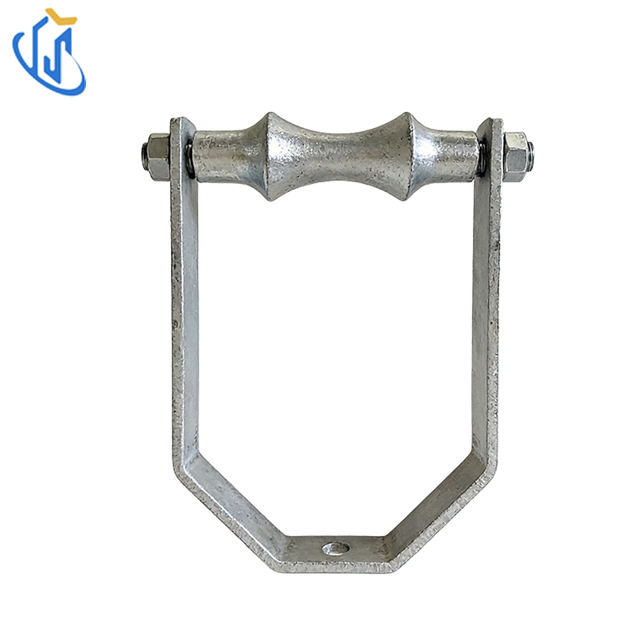
Roller systems accommodate significant longitudinal pipe movement. Pipes expand and contract due to thermal changes. For outdoor expansion systems, engineers require HDG for the outer frame. However, the heavy zinc coating can severely restrict the movement of the roller itself. A Roller Pipe Hanger must spin freely. Engineers must verify axle and roller clearances carefully. These clearances must account for the HDG thickness to prevent the roller from binding on the axle.
Coating Specification Comparison Matrix
Feature
Zinc-Plated (Electrogalvanized)
Hot-Dip Galvanized (HDG)
Coating Thickness
0.2 – 0.5 mils (Thin & Uniform)
2.0 – 4.0+ mils (Thick & Variable)
Bond Type
Mechanical/Electrical Adhesion
Metallurgical Alloy Bond
Thread Fit Requirements
Standard Machining Tolerances
Oversized / Over-tapped Nuts Required
Heat Distortion Risk
None (Cold Process)
Low to Moderate (840°F Bath)
Optimal Environment
Indoor, Dry, Climate-Controlled
Outdoor, Industrial, High-Humidity
Scalability, Procurement, and Next-Step Action Logic
Specifying metal supports requires more than just understanding material science. You must also navigate supply chain realities and field-level logistics.
Zinc-plated components dominate the global supply chain. They are globally standardized and highly available off-the-shelf. Distributors stock thousands of these units locally. You can procure them immediately for rapid deployment. The standardization of zinc plating means you rarely face supply bottlenecks for indoor projects.
Conversely, HDG procurement requires strategic planning. While standard HDG clevis and roller supports exist, custom configurations demand longer lead times. Many fabricators require bulk minimums to justify firing up the galvanizing kettle. You must factor these lead times into your project timeline to avoid construction delays.
To streamline your decision process, apply this shortlisting logic:
Determine the Environment: Look at the final installation site. Choose Zinc-Plated for indoor, dry environments. Mandate HDG for outdoor, humid, or corrosive environments.
Check Pipe Material: Evaluate what the hanger will physically touch. Add dielectric isolation pads if your piping is copper or stainless steel. This step stops galvanic corrosion before it starts.
Verify Mechanical Requirements: Check all moving parts. Ensure thread tolerances match the selected finish. Specify over-tapped nuts for any HDG threaded rods.
Conclusion
Specifying the correct finish remains a critical engineering decision. It is never a mere purchasing afterthought. Your choice directly influences the structural safety of the entire facility.
Zinc-plated components offer excellent precision. They deliver unmatched cost-efficiency for indoor applications. They keep threads running smoothly and arrive ready to install. Meanwhile, HDG stands as the non-negotiable standard for longevity in harsh environments. Its thick alloy layers physically shield steel from aggressive outdoor elements.
Take action on your next project by reviewing specific environmental conditions against ASTM corrosion data. Consult directly with a structural support manufacturer to confirm thread compatibility across all moving parts. Finally, always request engineering submittals based on the required lifespan of the facility to ensure lasting performance.
FAQ
Q: Can you paint over hot-dip galvanized and zinc-plated hangers?
A: Yes, but it requires proper surface preparation. You must follow standards like SSPC-SP 16. You also need specific primers, such as epoxy or wash primers. Standard alkyd paints will saponify and rapidly peel off any zinc surface.
Q: Will a galvanized hanger cause corrosion on a copper pipe?
A: Yes. Direct contact between galvanized steel and copper creates a bimetallic cell. This contact leads to rapid galvanic corrosion. You must always use a dielectric barrier, such as a felt, rubber, or neoprene lining, to isolate them.
Q: Why don't standard nuts fit onto my hot-dip galvanized threaded rod?
A: The HDG process adds between 2 to 4 mils of thickness directly to the threads. Standard nuts will bind immediately. You must use over-tapped nuts designed specifically to accommodate HDG hardware.
Q: Is electrogalvanized the same as zinc-plated?
A: Yes. In the context of pipe supports, electrogalvanizing serves as the industrial term for zinc plating via electrical current. Both terms refer to the exact same thin, indoor-rated protective coating.
Utterly TY Intelligent Technology Co.,Ltd. is a high-tech private enterprise integrating product design, research and development, sales and installation.