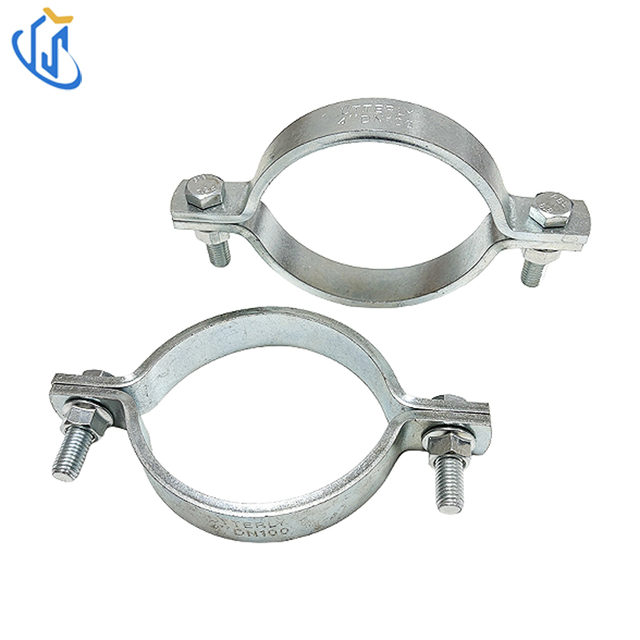
Pipe clamps represent far more than a minor hardware expense on a project ledger. They act as critical infrastructure components across modern facilities. They actively prevent catastrophic pipeline failure. They manage severe system vibration and ensure structural compliance. Improper selection brings substantial risks to your entire network. System operators might face rapid galvanic corrosion or thermal expansion restriction. You could experience unwanted acoustic transfer across building floors. Sheer hardware failure under dynamic loads remains a constant threat. When pipe supports fail, unplanned downtime disrupts operations entirely. This guide provides a vendor-neutral, engineering-focused framework. We help you evaluate, select, and install the correct pipe supports. You will learn to match specific industrial scenarios to their ideal structural solutions. We cover applications ranging from heavy manufacturing bases to commercial HVAC installations. You can systematically eliminate weak points in your piping infrastructure.
Key Takeaways
Choosing the right pipe clamp requires matching structural design with the specific dynamic and static loads of the piping system.
Different applications demand specific clamp architectures, ranging from Riser Pipe Clamps for vertical support to Rubber Lined Clamps for vibration mitigation.
Evaluating clamps through the lens of strength, stability, and long-term environmental performance prevents premature failure and compliance violations.
Standardizing installation best practices—such as torque control and spacing—is just as critical as the hardware selection itself.
The Business Case for Precision: Why Pipe Clamp Selection Matters
You must frame clamp selection as a strict risk-mitigation strategy. Do not treat it as a simple purchasing checklist. Unplanned downtime scales exponentially in operational disruption. Compromised pipe supports disrupt entire facilities very quickly. We must carefully distinguish between static and dynamic loads. Static loads simply hold a pipe's resting weight safely. They account for the pipe material, internal fluid, and exterior insulation. Dynamic loads present a much harder engineering challenge. They involve managing sudden water hammer shocks. They require handling continuous mechanical vibration from active pumps. They also must accommodate thermal expansion during temperature shifts.
Proper specification remains absolutely essential for overall system integrity. You must meet strict industry building codes. Seismic requirements demand exact structural tolerances to prevent collapse. Acoustic standards heavily regulate HVAC noise isolation in commercial buildings. Neglecting these standards leads to severe compliance violations. It also accelerates the physical degradation of your pipeline joints. Precision in your selection process prevents these exact failure modes. It creates a highly resilient, fully compliant infrastructure system.
Core Pipe Clamp Types and Strategic Applications
Different industrial applications demand highly specific hardware architectures. You must map each use-case to its optimal structural solution. We will evaluate each core type based on its physical limitations and strategic advantages.
Saddle Pipe Clamp
Base-level support requires robust hardware solutions. You must transfer heavy pipe weight directly to a structural framework. Evaluate this option carefully for specific facility layouts. It works best for large-diameter, heavy-wall pipes. These massive systems require exceptionally high load dispersion. Do not use this particular design for suspending pipes from ceilings. Use a Saddle Pipe Clamp when resting lines securely on I-beams or floor mounts. It prevents localized stress concentrations on the bottom pipe wall. This extends the operational lifespan of heavy industrial pipelines.
Lateral Pipe Clamp
You must control side-to-side movement effectively in dynamic systems. Stabilize pipe runs against sudden horizontal thrust forces. Evaluate its critical role in high-stress operational environments. A Lateral Pipe Clamp becomes essential for systems experiencing high fluid velocity. It protects lines undergoing frequent and sharp directional changes. Lateral sway threatens joint integrity over an extended time. We install them specifically to lock the pipe axis securely. This prevents weld fatigue and eventual joint separation.
Riser Pipe Clamp
Vertical pipelines require specialized friction-based support structures. You must manage extended vertical pipe runs between building levels. It transfers the heavy weight of the riser securely. We route this weight directly into the building structure. This typically happens at engineered floor penetrations. Evaluation requires strict attention to manufacturer detail. You must adhere to specific tightening torque specs. Proper torque ensures sufficient grip without causing damage. A Riser Pipe Clamp will slip downward if under-tightened. Over-tightening risks crushing the pipe wall entirely.
Split Steel Clamp
Heavy-duty applications demand exceptionally rigid clamping mechanisms. Industrial setups require two-piece bolt-together security for safety. A Split Steel Clamp offers very high tensile strength. However, it lacks inherent vibration dampening capabilities by design. You typically need strict matching to exact external pipe diameters. Engineers use them for highly stable, static industrial runs. They excel in environments where absolute structural rigidity matters most. They resist extreme mechanical pull-out forces very well.
Rubber Lined Clamp
Acoustic isolation matters deeply in modern commercial buildings. Vibration dampening extends overall mechanical system longevity. You must accommodate slight thermal expansion safely and quietly. Use these specific supports in HVAC, plumbing, and refrigeration lines. The thick elastomer lining prevents direct metal-to-metal contact. This feature actively mitigates galvanic corrosion between incompatible materials. A Rubber Lined Clamp ultimately extends the lifespan of the entire support network. It absorbs high-frequency vibrations before they reach the building frame.
The Selection Framework: Evaluating Strength, Stability, and Performance
Engineers rely on a three-pillar framework for hardware evaluation. You must assess strength, environmental stability, and dynamic performance. This ensures you meet recognized industry standards like MSS SP-58.
First, analyze physical strength through load capacity and material grade. Match the clamp's safe working load (SWL) perfectly. Compare it directly to the pipe's maximum operating weight. Include the heavy weight of dense fluids and thick exterior insulation. Choose the yield strength carefully based on system pressure. Decide intelligently between standard carbon steel and 316 stainless steel. Your choice dictates the ultimate safety margin of the suspension system.
Next, evaluate stability through strict environmental resistance profiling. Assess your daily operating environment thoroughly before purchasing. Address any specific localized corrosion threats immediately. Consider standard hot-dip galvanizing or advanced zinc plating. Specific polymer coatings strongly resist severe chemical exposure in plants. They also protect critical infrastructure against harsh coastal salinity. A strong clamp fails quickly if its coating degrades.
Finally, review performance regarding thermal and acoustic dynamics. Factor in the continuous baseline operating temperatures. Assess whether the hardware allows necessary pipe movement. Some systems require specialized sliding capabilities to prevent buckling. Others need a rigid fixed anchor point to restrict travel. You must align the support type with the pipe's thermal expansion coefficient.
Evaluation Criteria Comparison Chart
Evaluation Pillar
Primary Metric
Key Engineering Consideration
Common Material/Coating
Strength
Safe Working Load (SWL)
Fluid weight plus insulation mass
Carbon Steel, 316 Stainless
Stability
Corrosion Resistance
Chemical exposure and ambient humidity
Hot-Dip Galvanized, Zinc Plated
Performance
Thermal/Acoustic Dynamics
Linear expansion and pump vibration
Elastomer Linings, PTFE Sliders
Implementation Realities and Installation Best Practices
Proper selection means nothing without disciplined installation practices. Field errors frequently compromise highly engineered support systems. We must standardise our approach to pipeline implementation.
Galvanic corrosion remains a massive threat to pipeline integrity. You must avoid direct contact between dissimilar metals. Copper pipes react very poorly to bare steel hardware. The resulting chemical reaction eats through the pipe wall. Use physical isolators or specialized elastomer linings to prevent this. A small oversight here causes catastrophic leaks later.
Torque protocols require strict enforcement across all job sites. Address the common installation error of aggressive over-torquing. Excessive rotational force deforms thin-walled pipes very quickly. It crushes brittle PVC and damages soft copper lines. It also destroys the cellular structure of vibration-dampening linings. This completely defeats their primary acoustic purpose. Use calibrated torque wrenches instead of pneumatic impact drivers.
Follow these standardized installation practices for optimal safety:
Audit the engineered support spacing intervals before beginning work.
Calculate spacing based strictly on pipe material, size, and fluid density.
Install fixed anchor points before positioning any sliding guides.
Apply calibrated torque gradually to avoid crushing internal pipe walls.
Inspect elastomer linings visually for any signs of extreme compression.
Shortlisting Logic and Procurement Next Steps
Purchasing departments must align closely with engineering teams. You need a structured approach to final hardware procurement.
Defining project parameters: Audit your basic system requirements first. Measure the exact pipe material and true outside diameter (OD). Document the peak operating temperature accurately. Calculate worst-case load requirements and note environmental corrosivity.
Validating vendor claims: Request comprehensive technical data sheets immediately. Look for verified safe working load ratings. Demand proper material certifications from the manufacturer. Check for compliance standards like UL/FM approvals. Fire suppression systems legally require these strict safety certifications.
Labor speed and lifecycle durability: Shift your mindset during the procurement phase. Focus heavily on the labor speed of initial installation. Faster installation mechanisms reduce contractor hours on site. Prioritize the physical lifecycle durability of the clamp assembly. High-durability designs prevent early and difficult replacement cycles.
Conclusion
The right pipe clamp bridges a critical structural gap. It transforms a vulnerable piping network into resilient infrastructure. You mitigate severe risks like galvanic corrosion and joint fatigue. Proper evaluation focuses squarely on strength, stability, and dynamic performance. We strongly encourage stakeholders to integrate clamp selection early. Do not treat pipeline supports as a late-stage afterthought. Proper planning prevents massive schedule delays and compliance failures.
Take immediate action on your next facility project. Consult directly with a mechanical technical specialist. Review a specific product catalog based on your finalized loads. Lock down your environmental requirements before requesting vendor quotes. Precision in your hardware choice guarantees long-term operational success.
FAQ
Q: What is the difference between a fixed pipe clamp and a sliding pipe clamp?
A: Fixed clamps act as rigid anchors for the system. They actively direct and control thermal expansion forces. They prevent movement at specific pipeline junctions. Sliding guides allow planned linear movement. They let the pipe expand and contract naturally. This prevents dangerous stress buildup within the pipe wall.
Q: How do I determine the correct size for a pipe clamp?
A: You must measure the true Outside Diameter (OD). Do not rely solely on the Nominal Pipe Size (NPS). NPS does not always match the exact exterior dimensions. Clamps must match the OD precisely. You must also factor in the thickness of any exterior insulation.
Q: Are rubber lined clamps suitable for high-temperature steam lines?
A: Standard elastomers degrade rapidly at very high temperatures. They melt or become brittle under steam heat. You must highlight the physical limitations of standard rubber linings. Suggest high-temperature alternatives for steam applications. Specialized silicone inserts or insulated high-heat saddles work best.
Utterly TY Intelligent Technology Co.,Ltd. is a high-tech private enterprise integrating product design, research and development, sales and installation.